First Seen
2023-05-24T21:09:26+00:00
simple-description (qwen3.5_2b-q8_0)
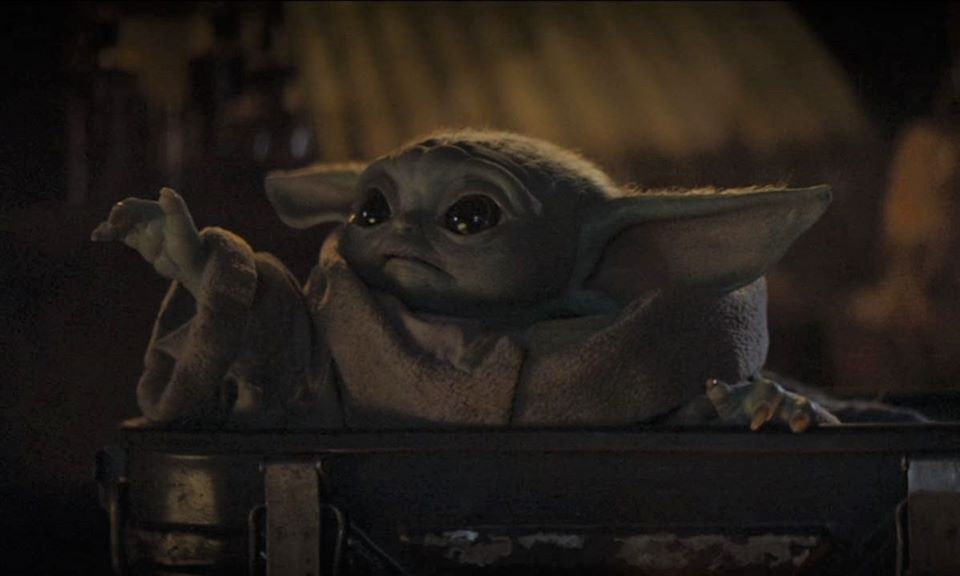
This image features Baby Yoda from The Mandalorian, the character who became famous for the viral "Yoda says" meme. While he is currently just sitting and making silly noises, this clip is typically paired with his signature gibberish words like "Wah!" or "Grr!" to finish the joke. The meme relies on the concept of empty screen space (the silence) contrasting with the sudden appearance of his silly gibberish text.
simple-description (llama3.2-vision_11b)
The "Baby Yoda Show" meme features a screenshot of the character from the Star Wars series "The Mandalorian," but with a humorous twist. The image shows a "Baby Yoda" character sitting in a chair, with a caption that reads "Baby Yoda Show" and "I only watch this show for the Baby Yoda." The meme is a play on the character's popularity and the fact that many fans tune in to the show specifically to see the character.
detailed-analysis (gemma3-27b-vision)
Okay, let's analyze the image of "Baby Yoda" (Grogu) from The Mandalorian through the lenses you requested. Given the image and subject, some lenses will be more fruitful than others.
Visual Description
The image depicts Grogu, an infant member of the same alien species as Yoda, centered and in focus. He is positioned within a partially-obscured, dark box or container. The lighting is low-key, dominated by a warm, yellow-orange glow that highlights his large, expressive eyes and the wrinkles of his face. Grogu's skin appears a muted green tone. He is depicted mid-action, with his tiny hands raised as if in a gesture of surprise, appeal, or perhaps force sensitivity. He appears to be looking upwards. The background is almost entirely black, and the overall aesthetic is soft and vulnerable. The composition emphasizes Grogu's small size and the potential for protective feelings from the viewer. The box could be seen as both confining and protective.
Foucauldian Genealogical Discourse Analysis
Applying Michel Foucault's ideas, we can examine how “cuteness” and infantilization become discursive forces shaping our understanding of power. Grogu is constructed as an object of care and protection through specific visual cues: large eyes, small size, helplessness. This construction isn't natural but built through a genealogy of images and narratives. Historically, images of infants have been used to evoke empathy and control – to invoke care and obedience. Disney/Lucasfilm leverage this pre-existing historical and cultural discourse.
The image of Grogu is circulated, amplified by social media, and becomes a site where power operates through controlling our emotional responses. The overwhelming public adoration isn’t a spontaneous emotion but a result of a historically developed discourse about infant vulnerability and the desire to nurture. The image of Grogu reinforces norms of dependency and the expectation of care, implicitly defining who (and what) deserves protection and care, and perhaps, implicitly, who or what does not. The use of ‘cuteness’ as a rhetorical tactic obscures the character's latent potential power – his Force sensitivity – and reinforces existing power structures by masking and redirecting it.
Critical Theory (Frankfurt School)
From a Critical Theory perspective (think Adorno and Horkheimer), Grogu can be seen as a symptom of a "culture industry" producing commodified, mass-produced emotional experiences. The character's widespread appeal and meme-status suggest a regression to infantile desires and a suppression of critical thinking. The image, while ostensibly innocent, serves to distract from more pressing social and political issues.
The ease with which we project emotions onto Grogu demonstrates the power of the culture industry to manipulate our feelings and create a passive, consumerist audience. The character functions as a 'false need', a manufactured desire that serves the interests of the media conglomerate (Disney). Rather than engaging with complex ethical dilemmas, the audience is offered a simple, emotional connection to a marketable character. The overstimulation of simplistic, emotionally manipulative imagery contributes to the erosion of critical thought and social awareness.
Marxist Conflict Theory
From a Marxist perspective, the image of Grogu represents a symbolic obfuscation of class conflict and economic disparity within the Star Wars universe (and perhaps our own). While the galaxy is portrayed as being in a constant state of conflict, the focus on the individual relationship between the Mandalorian and Grogu – fueled by emotional resonance – eclipses the systemic injustices that cause that conflict.
The character's cuteness and vulnerability serve to naturalize dependency and deflect attention from the real sources of power and exploitation. Grogu becomes a commodity, exploited by Disney for profit, mirroring the exploitation of labor and resources within the Star Wars narrative itself. The attention and resources devoted to the character distract from addressing the fundamental economic issues that plague the galaxy. The emotional investment in Grogu reinforces the status quo by encouraging viewers to focus on individual relationships rather than systemic change.
Postmodernism
A postmodern reading could see Grogu as a hyperreality – a simulation of cuteness that has become more 'real' than real. His viral status and meme-ification blur the lines between the character within the narrative and the image as a self-contained cultural phenomenon. The character is constantly re-appropriated, remixed, and re-contextualized, losing any singular or original meaning.
The image embodies the postmodern condition of pastiche and the loss of grand narratives. It's a signifier emptied of essential meaning, its significance solely derived from its circulation and reception within a fragmented culture. The character's appeal is not based on a shared understanding of ethical or moral values but on a shared experience of consumption and online interaction. The image represents a shift away from authenticity and toward spectacle.
Queer Feminist Intersectional Analysis
This lens is less directly applicable, but we can consider how Grogu's depiction (as an innocent, dependent being) reinforces traditional gender roles and power dynamics, even if unintentionally. The character’s vulnerability evokes protective instincts, reinforcing the culturally ingrained expectation that women and children (and, in this case, alien infants) are objects of care and protection.
The emphasis on caregiving also implicitly positions women and marginalized genders as the primary caretakers, perpetuating the gendered division of labor. While Grogu does not have a fixed gender, the inherent construction of vulnerability evokes traditionally feminine-coded traits and reinforces the expectation of nurturing. An intersectional analysis would also acknowledge the role of power and privilege in shaping the reception of the image; who gets to define vulnerability and who benefits from the expression of care?
I hope this multi-layered analysis is helpful. Let me know if you'd like me to elaborate on any specific lens or aspect!
simple-description (llama3.2-vision)
The meme is an image of the character Yoda from the Star Wars franchise, but it's a young version of him, known as "Baby Yoda" or "The Child" from the show "The Mandalorian". The image typically shows Baby Yoda looking curious or surprised, with a text overlay that says "When you finally understand the problem but don't know the solution".
tesseract-ocr
"“.s- i a... a ys a . ' s SS a alll ie asi Son Ge poseere=t =F é Oe = cw 2 - wet “ ss q ie Boies “a ——— oe ai ee ee ? Ia | ee ie 7 es le a: “3 seen ee en ee | Fe { \ oe ates ‘ ‘Ss z {