First Seen
2023-07-18T17:57:40+00:00
simple-description (qwen3.5_2b-q8_0)
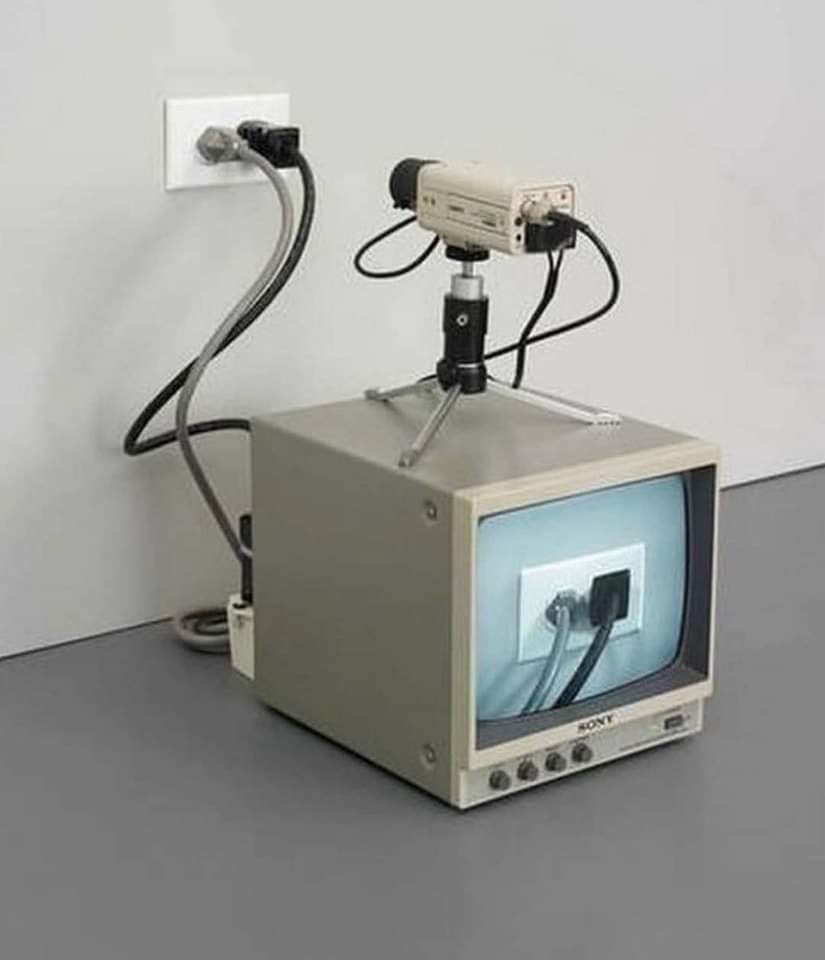
This image uses the category of surveillance to create a humorous visual loop. The artwork features a vintage Sony television set plugged into a wall, with its internal monitor displaying the exact power socket it is connected to. This self-referential display mimics a security camera recording its own connection, creating a playful commentary on how technology often spies on its own utility.
simple-description (llama3.2-vision_11b)
The meme is an image of a classic 1980s-era computer monitor with a built-in camera, now connected to a modern smart home security system. The text overlay reads "When your home security system is from the 80s". The meme pokes fun at the outdated technology, implying that the security system is still using ancient hardware, and the image is a humorous commentary on the contrast between old and new technology.
detailed-analysis (gemma3-27b-vision)
Okay, here's an analysis of the image, divided into sections as requested. I'll include sections only where applicable. It's important to note that interpretation can vary, and this is one possible reading.
Visual Description
The image depicts a vintage Sony television set, square and boxy in design, situated on a dark gray surface. The screen displays a mirrored image of the electrical outlet behind it, along with the cords connecting to the outlet. Mounted atop the television, like a surveillance device, is a small video camera on a tripod. Two cords, likely power cables, snake down from the camera to the electrical outlet, and one other cord is visible behind the TV. The wall is a neutral off-white. The overall aesthetic is stark, minimalistic, and somewhat unsettling, suggesting a sterile and monitored environment. The lighting is even and flat, contributing to the cold, impersonal feel.
Foucauldian Genealogical Discourse Analysis
This image is rich for Foucauldian analysis. The core concept at play is panopticism. The camera, positioned as it is, evokes the structure of Jeremy Bentham’s Panopticon – a prison design where inmates are constantly under potential surveillance, even if not actively watched. The camera isn’t necessarily recording at this moment, but its presence implies continuous potential monitoring. The television screen is crucial – it presents a reflection of the power source (the outlet), seemingly creating a self-monitoring loop.
The discourse at play isn’t simply about technology but about power relations. The camera-television setup creates a system of control, mirroring how power operates in modern society through pervasive surveillance and media.
A genealogical approach would trace the historical development of this power dynamic: from physical institutions like prisons, to the rise of mass media and, now, digital surveillance. The image presents a condensed illustration of this history, suggesting that we live in a society where self-monitoring is increasingly normalized and interwoven with the technologies we use. The fact the TV displays the outlet itself can be read as a metaphor for our self-awareness of being monitored – we’re aware of the power source, yet it seems inescapable and feeds back into the system.
Critical Theory
Building on the Foucauldian analysis, a Critical Theory lens views the image as a critique of the culture industry and the commodification of the gaze. The television, a key component of mass media, isn't broadcasting entertainment; it's reflecting the source of its own power, and being monitored in turn. This subverts the traditional function of the television, transforming it from a vehicle for passive consumption to a participant in a system of control.
The image questions the very notion of authenticity in the age of media. The reflection on the screen implies a mirroring of reality, yet the reality is mediated and controlled by the surveillance apparatus. What we see isn’t objective truth, but a constructed representation dictated by the power structures embedded in the technology.
The overall effect is alienation. The sterile environment and the cold, impersonal technology contribute to a sense of detachment and dehumanization. The subject (the viewer) is positioned as a passive observer in a system they cannot control.
Postmodernism
The image embodies several key characteristics of Postmodernism. The meta-commentary on the role of media and surveillance is central. The TV showing the outlet is not about content, it’s about the system of broadcasting/viewing itself. It’s a self-referential loop.
The deconstruction of the traditional role of the television— from entertainment to a tool of surveillance— aligns with postmodern sensibilities. It subverts expectations and challenges the established order.
The lack of a clear narrative or meaning further reinforces the postmodern aesthetic. The image is open to multiple interpretations and resists a singular, definitive reading. The simulacra—the imitation of reality by the image of the outlet on the TV—is key. The image is a substitute for a reality, one that feeds back into itself.
In Summary:
The image is a powerful commentary on power, surveillance, and the role of media in contemporary society. It draws upon multiple theoretical frameworks to expose the underlying structures of control and alienation that permeate modern life. It is a unsettling yet compelling artwork that invites viewers to question their own relationship with technology and the systems that govern their lives.
Let me know if you'd like me to elaborate on any of these points or explore other theoretical lenses!
simple-description (llama3.2-vision)
The meme is a photo of a 1980s-era computer with a built-in camera, but the camera is being used to take a picture of the computer's own monitor. The text in the image reads "I just spent 10 minutes adjusting the camera and it turns out I was just filming my screen the whole time".
tesseract-ocr
) i, . , hottie 3 3 | im | |