First Seen
2023-12-14T07:41:51+00:00
simple-description (qwen3.5_2b-q8_0)
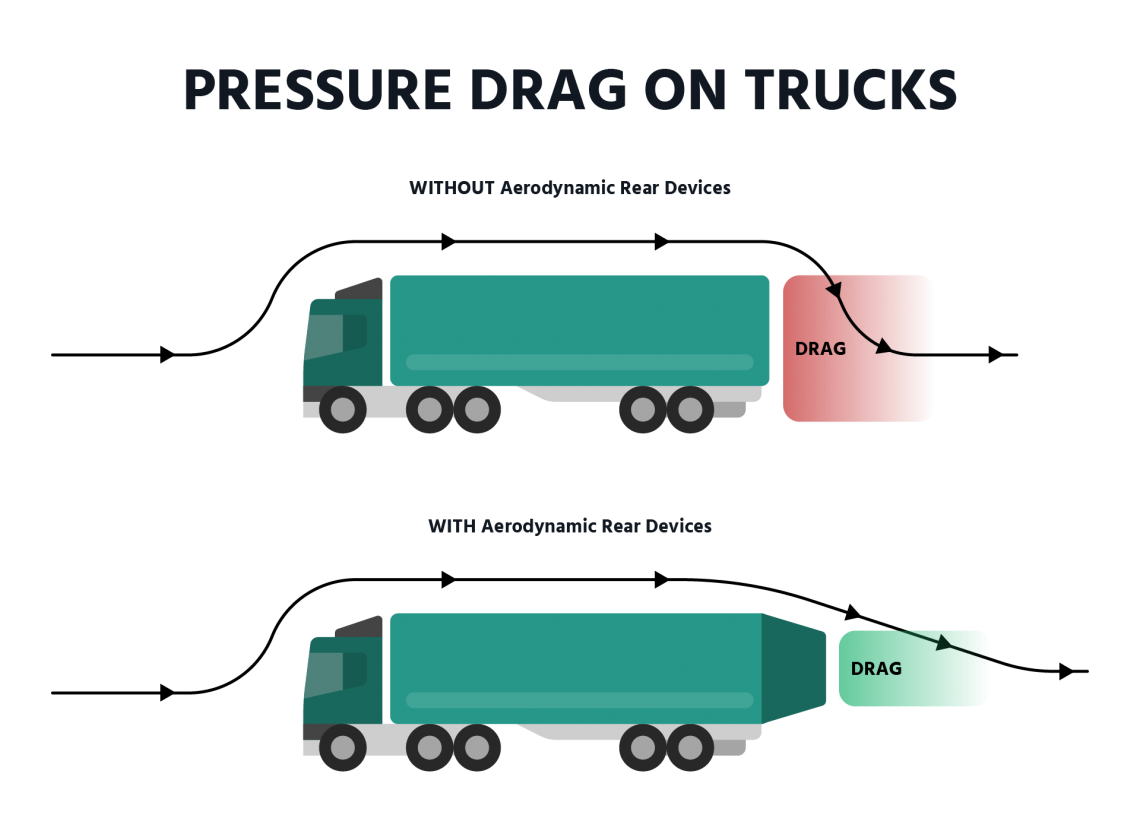
This infographic highlights how aerodynamic design reduces environmental impact. The top diagram illustrates "WITHOUT Aerodynamic Rear Devices," showing how high pressure drag wastes energy and fuel by forcing air to be pushed back into the vehicle. In contrast, the bottom diagram shows "WITH Aerodynamic Rear Devices," where streamlined shapes reduce air resistance, helping the truck conserve energy and minimize waste.
simple-description (llama3.2-vision_11b)
The meme is a humorous illustration of a truck with a large, green, and very long trailer, with the words "I can park it" written on it. The image is meant to poke fun at the idea that someone is bragging about their ability to park a large vehicle, implying that they are not actually capable of doing so. The meme is likely used to express sarcasm or irony, and is often used in a lighthearted or humorous way to poke fun at oneself or others.
detailed-analysis (gemma3-27b-vision)
Okay, let's break down this image of truck aerodynamic drag through the lenses you've requested. I'll structure it into sections, only including those sections where the image lends itself to that theoretical framework.
Visual Description
The image presents a simplified diagram comparing the aerodynamic drag experienced by a semi-truck with and without aerodynamic rear devices. Two side-view illustrations of a green truck are presented:
- Top Illustration (Without Devices): Shows a truck with a blunt rear end. A red area is marked as “DRAG” and extends significantly behind the truck, signifying substantial aerodynamic resistance. The accompanying arrows show airflow separating from the truck's rear.
- Bottom Illustration (With Devices): Depicts a truck fitted with aerodynamic devices, resulting in a much smaller "DRAG" area (colored green) behind the truck. The arrows again indicate smoother airflow following the rear contours, suggesting reduced resistance.
The overall visual emphasizes the reduction of drag through the application of technology. It’s a clear, simplified depiction of a physical principle aimed at improving efficiency. The image is clean, uses basic shapes, and focuses on contrasting two states.
Foucauldian Genealogical Discourse Analysis
This image can be examined through a Foucauldian lens as a visual manifestation of power/knowledge related to trucking and logistics.
- Discourse of Efficiency: The image participates in a broader discourse around efficiency, optimization, and “streamlining” in the transportation industry. It doesn’t just show reduced drag; it promotes the idea that drag is a problem to be solved, framing aerodynamic devices as a desirable (and even necessary) solution.
- Normalization of Optimization: The graphic normalizes the concept of optimizing everything – even the airflow around trucks. It implies that continuous improvement and reduction of resistance are inherently good and desirable. This shapes how we understand trucking and transportation – not as merely moving goods, but as a system to be perfected.
- The Panoptic Effect: The visual could be seen as a mini-panopticon for logistics managers. The clear depiction of drag ‘visible’ in the image implies constant monitoring and evaluation of efficiency. The knowledge of drag and solutions creates a pressure to implement these devices.
- Genealogical Tracing: The image isn't about drag per se, but about the historical shift in how we think about drag. Earlier practices may have accepted drag as an unavoidable element of transportation. The image indicates a new era where drag is identified as a problem and actively engineered out of the system.
Marxist Conflict Theory
The image can be interpreted through a Marxist lens as revealing the material conditions and class relations embedded within the transportation industry.
- Capital Accumulation: The reduction of drag directly translates to reduced fuel consumption, leading to lower operating costs for trucking companies. This, in turn, increases profitability – thus, contributing to capital accumulation for the owners of those companies. The image visually justifies an investment in these aerodynamic devices as a means of maximizing profits.
- Exploitation of Labor: While appearing neutral, the image can be read as indirectly supporting the exploitation of truck drivers. Reducing drag might allow companies to demand faster delivery times from drivers (increasing workload) or maintain tighter schedules to maximize profits.
- Technological Determinism vs. Class Struggle: The image might subtly suggest that technological solutions (aerodynamic devices) are the primary drivers of efficiency. However, a Marxist analysis would emphasize that efficiency gains are rarely distributed equitably, and often benefit those already in positions of power. The image doesn’t address questions like: Who controls the technology? Who benefits from the cost savings? Are these savings passed on to consumers or workers?
- Competition and the Drive for Efficiency: The reduction of drag represents a competitive advantage in the market. Trucking companies adopting these devices gain an edge over those that don't, leading to a further concentration of wealth and power.
Note: I've omitted sections for Postmodernism and Queer Feminist Intersectional Analysis because, while potentially applicable in broader contexts, the image itself doesn't lend itself to a particularly strong or meaningful analysis through those lenses. It's a relatively straightforward depiction of a technical principle. You could force a postmodern reading (e.g., deconstructing the notion of "drag" or the authority of engineering knowledge), but it would feel strained.
Let me know if you'd like me to elaborate on any of these points or explore a different theoretical approach!
simple-description (llama3.2-vision)
This meme is a play on the phrase "drain" vs "drain" with a train pun. The meme shows a picture of a train with a "drain" sign next to it, and a "drain" sign next to a truck, with the text "In 2 trains, I drain" above it. The joke is that the train is a "train" and the truck is a "drain" with a similar name.
tesseract-ocr
PRESSURE DRAG ON TRUCKS