First Seen
2023-05-10T21:03:42+00:00
simple-description (qwen3.5_2b-q8_0)
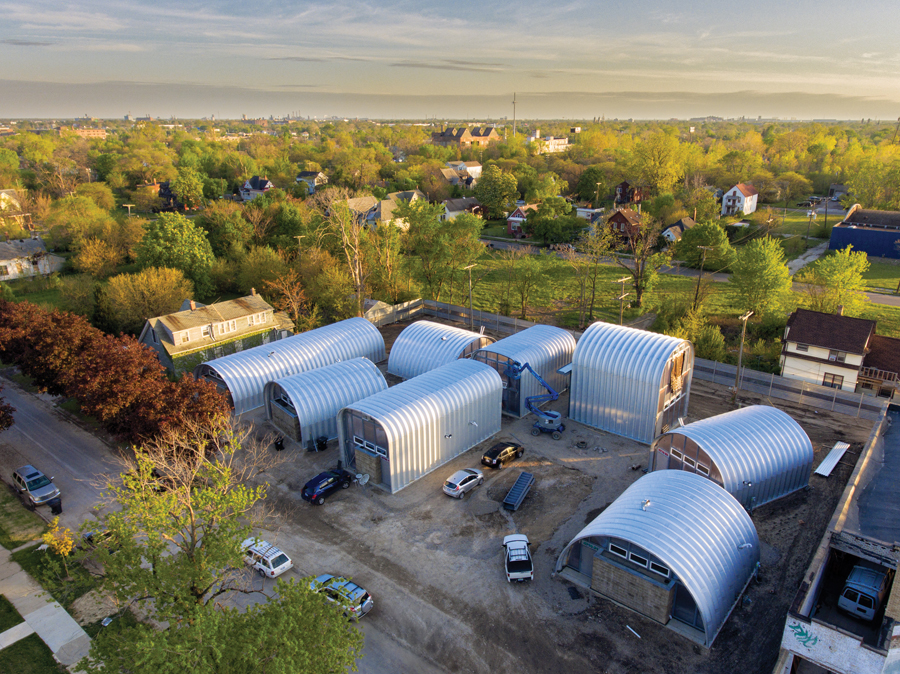
Based on the Sustainability category provided, this image is likely circulated as a visual celebrating modern, eco-conscious architecture. It shows a cluster of large, silver, corrugated metal structures—possibly modular shelters or temporary storage units—parked within a peaceful residential neighborhood.
This "meme" (or image) juxtaposes industrial-looking, lightweight materials with a beautiful suburban backdrop, symbolizing a shift away from traditional concrete construction toward sustainable, potentially temporary or repurposed green buildings. There is also a small green logo visible on the side of a building in the bottom right corner, further emphasizing the environmental theme.
simple-description (llama3.2-vision_11b)
The meme appears to be a screenshot of a Wikipedia article about the "Wikipedia:Wikipedia is not a website" page, with a red link to a page that doesn't exist. The text "Wikipedia:Wikipedia is not a website" is highlighted in red, implying that the page is not available or does not exist. The meme is likely poking fun at the idea that Wikipedia is not a website, which is a contradictory statement.
detailed-analysis (gemma3-27b-vision)
Okay, let's break down this aerial photograph through the requested critical lenses. Note that some sections will be brief or nonexistent if a lens doesn't strongly apply.
1. Visual Description
The image is an aerial photograph showcasing a unique residential development. The dominant feature is a cluster of approximately seven arched, metallic structures (likely homes). These structures are uniformly silver and have a distinctly modern, somewhat industrial aesthetic. They are arranged in a slightly organic, curving pattern, contrasting with the orthogonal grid of the surrounding residential neighborhood. The structures appear to be connected by walkways or covered passageways.
The setting is a mature residential area with mature trees filling most of the view. Traditional, mostly older, single-family homes surround the modern cluster, creating a strong juxtaposition of architectural styles. Several cars are parked around the structures and on the nearby streets, suggesting that the development is occupied. The photograph is taken in daylight, with somewhat diffused lighting and a pale blue sky. A construction lift is visible between some of the arched structures, implying ongoing development or maintenance. The overall impression is one of deliberate experimentation within a traditionally established context.
2. Foucauldian Genealogical Discourse Analysis
This scene lends itself to a Foucauldian analysis by demonstrating a shifting discourse on "home" and "community." Traditional notions of home, as embodied by the surrounding Victorian and craftsman houses, emphasize individual property, contained domesticity, and a certain aesthetic of permanence. The arched structures disrupt this established discourse.
- Power/Knowledge: The development represents an assertion of new forms of architectural knowledge and practice, potentially challenging the dominance of traditional building codes, homeowner association norms, or prevailing aesthetic preferences. The developers are engaging in a practice of creating a different way of living and, consequently, redefining what "home" means.
- Discipline & Normalization: The surrounding homes represent a “normalized” way of living and building. The arched structures, however, resist fitting neatly into this established regime. This resistance is not necessarily overt rebellion, but rather a sideways move, a different way of organizing space and living within it.
- Genealogy: One could trace the genealogy of this architecture – the historical influences (e.g., Quonset huts, modern architectural movements) – to reveal how it draws on and reimagines past forms to create something new. This isn’t simply an aesthetic choice; it’s a historical articulation of a different possibility.
3. Marxist Conflict Theory
While the image doesn’t scream ‘class struggle,’ several aspects invite a Marxist reading.
- Commodification of Space: The development can be seen as part of the broader commodification of space within urban environments. The land itself is a commodity, and these structures represent a specific value proposition – a unique, modern living experience marketed to a certain demographic.
- Spatial Segregation & Gentrification: The modern aesthetic and likely price point of these structures suggest they may be contributing to gentrification within the neighborhood. They may attract a different socioeconomic group, potentially displacing long-term residents or altering the character of the community. The stark contrast between the old and new homes visually embodies this tension.
- Production & Labor: The construction lift is a physical reminder of the labor involved in building these structures. The materials, transportation, and skilled workers all represent forms of exploited labor embedded within the final product.
4. Postmodernism
The scene is practically an illustration of postmodern principles:
- Juxtaposition & Pastiche: The core element is the deliberate juxtaposition of radically different architectural styles. The modern, metallic arches against the backdrop of traditional homes is a classic postmodern gesture. It is not about creating a coherent style but about playing with contrasts and disrupting expectations.
- Rejection of Grand Narratives: The development challenges the idea of a single, universally valid aesthetic or way of living. It suggests a fragmentation of styles and a celebration of diversity.
- Playfulness & Irony: There’s a playful quality to the scene. The seemingly incongruous structures suggest an ironic commentary on traditional notions of home and community.
- Surface & Simulacra: The metallic cladding of the structures creates a polished, somewhat artificial surface. The emphasis is on appearance and aesthetic effect, potentially prioritizing style over substance.
5. Queer Feminist Intersectional Analysis
This lens is less directly applicable, but potential connections can be made.
- Disrupting Normative Spaces: The non-traditional architecture can be seen as a metaphorical disruption of normative spatial arrangements. Traditional homes often reinforce patriarchal and heteronormative domestic roles. These structures, with their unconventional forms, could be interpreted as creating spaces that are more open to diverse ways of living and relating.
- Challenging "Home" as a Fixed Identity: The arched structures, resisting easy categorization, may suggest a fluidity in identity and a rejection of fixed notions of "home." This could resonate with queer and feminist perspectives that challenge essentialist understandings of identity.
- Accessibility & Inclusivity (Potential): If designed with inclusivity in mind, the structures might offer more accessible living spaces than traditional homes, accommodating diverse bodies and needs. However, this would require further investigation.
In conclusion: This photograph is rich with layers of meaning, offering multiple avenues for critical analysis. It’s a visually striking scene that encapsulates many of the key themes and concerns of contemporary social and cultural theory. While certain lenses offer more direct interpretations than others, each provides valuable insights into the complex interplay of space, power, and identity.
simple-description (llama3.2-vision)
The meme is a picture of a building with a large, curved roof that looks like a giant metal "bowl". The text in the image reads "Dome of the Sun".
tesseract-ocr
Sg LE alge na eR heeds ag lias ; - ee ese | x a ae . ais as Th air 2 Cae ee ee Se 4 é & - = =" Ni 2 ‘y 35 S Se a ees: ig = on ee 4 See a ‘ a i! 6 nd S 4 i = “ay a | le Tes. a) i! S 4 eid ai we « 7 Se a 2 a 4 a re 74a See Be ees ee a le ili J Cee Sg ene ce gre. - £ Pe OO a ee ae PS “ES (a Cm, “ “hel SS ~ -S 2 a ies ed Sar : & ME a