First Seen
2023-11-13T06:19:37+00:00
simple-description (qwen3.5_2b-q8_0)
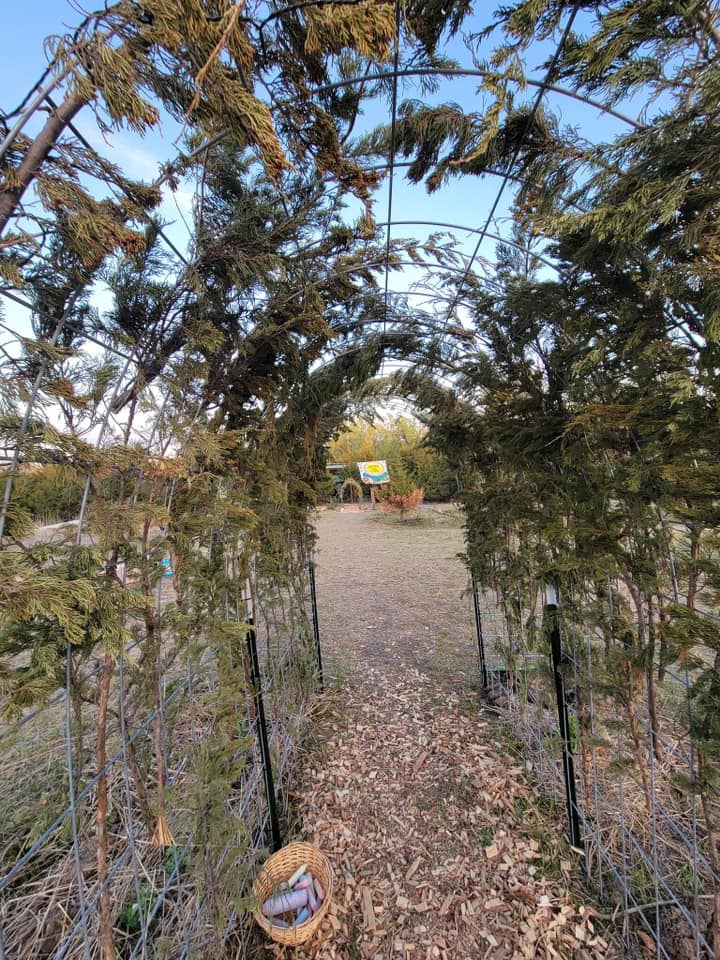
This image portrays a covered garden path with a metal trellis structure draped in dense evergreen branches, creating an arched tunnel effect. The ground is covered in wood chips, and a wicker basket filled with colorful items sits in the foreground. In the distance, a sign is visible against the blue sky. This scene is often shared in the "Garden" meme culture, highlighting a peaceful, enclosed space where nature and human-made structures coexist on a sunny day.
simple-description (llama3.2-vision_11b)
The meme is an image of a garden with a small, makeshift entrance made of twigs and leaves. The text "I have a garden" is written in a childish, handwritten font above the entrance. The image is a playful and whimsical representation of a person's pride in their small garden.
detailed-analysis (gemma3-27b-vision)
Okay, here's an analysis of the image, broken down into the sections you requested, only including those which meaningfully apply.
Visual Description
The photograph presents a symmetrical, tunnel-like structure formed by arched metal frameworks. Evergreen shrubs or young trees are trained to grow over and around these arches, creating a leafy canopy. The scene is bathed in warm, diffused light, suggesting late afternoon or early morning. A pathway, covered in gravel or compacted earth, extends into the distance, drawing the eye toward a more open area. Small black stakes and ties are visible, supporting the growth of the plants. In the foreground, a woven basket is visible at the path's entry. The overall feeling is one of deliberate cultivation and a gentle transition from one space to another. The sky is visible through the branches, a pale, washed-out blue.
Foucauldian Genealogical Discourse Analysis
This image lends itself to a Foucauldian analysis because it exemplifies the disciplining of nature. The metal arches and the stakes tying the trees represent a conscious effort to shape the natural world according to human desires – a desire for order, control, and aesthetic pleasure.
- Discourse: The scene reveals a discourse of horticultural control—the idea that nature is a resource to be managed, molded, and perfected. This isn’t a “wild” landscape; it's a landscape produced by a specific understanding of what constitutes a desirable garden.
- Power/Knowledge: The visible technology (arches, ties) represents the power of knowledge to impose order on nature. The gardener knows how to manipulate growth through these structures, demonstrating a mastery over the plant life.
- Genealogy: Tracing the "genealogy" of this practice—the historical development of garden design and horticulture—would reveal how specific ideas about beauty, order, and control have evolved over time and become normalized. This could point to broader societal structures of control and the desire for neatness and categorization.
- Discipline: The practice of training the trees is a form of subtle discipline—a means of normalizing their growth, making them conform to a predefined shape.
Critical Theory
Critical Theory, particularly in relation to the Frankfurt School, would examine this image as a representation of the desire for domination of nature. The image reflects the Enlightenment project of attempting to rationally control and order the world.
- Instrumental Reason: The arches and training structures are manifestations of instrumental reason – using technology and knowledge not for understanding nature, but for manipulating it to achieve a specific end (a visually pleasing tunnel).
- Alienation: The deliberate shaping of nature could be seen as an example of alienation—humans distancing themselves from the natural world through imposing their will upon it. Instead of engaging with nature "as is," it is transformed into a commodity—a carefully crafted aesthetic experience.
- Commodification of Nature: The scene, in a broader context of a garden or nursery, reflects the commodification of nature—reducing it to an object of consumption and aesthetic enjoyment.
Postmodernism
The image could be viewed through a postmodern lens by focusing on the artificiality and constructed nature of the scene.
- Simulation and Simulacra: This isn’t “natural” growth but a construction, a simulation of a natural form. The arches create the illusion of a tunnel, blurring the line between reality and representation.
- Deconstruction: One could "deconstruct" the image by questioning the very idea of a “garden” or “natural beauty.” What criteria are being used to define these concepts? The intentional structure reveals that "nature" is never entirely untamed or objective.
- Playfulness and Irony: The seemingly idyllic scene might contain a subtle irony. The effort required to create this effect highlights the human obsession with control and perfection, perhaps questioning the meaning of "natural beauty".
Important Note: I have intentionally not included Queer Feminist Intersectional Analysis or Marxist Conflict Theory as they don’t appear directly relevant to the image's primary content. While these frameworks could be applied in a broader socio-political context (e.g., by analyzing the labor involved in creating the garden or the social implications of garden ownership), they aren't central to the image's immediate visual and conceptual themes.
Let me know if you’d like me to elaborate on any of these analyses!
simple-description (llama3.2-vision)
This meme is an image of a tree with a sign that says "I'm not lazy, I'm just on tree time". The image is likely humorous because it plays on the common phrase "I'm not lazy, I'm just on energy-saving mode" and applies it to a tree, implying that trees are naturally lazy and only move when necessary.
tesseract-ocr
Teta pe he. Fa LARS Ps k Ma ates } op ees : Foss ‘ eg) tS ee a AS s BS are ee i =o a Se oS = eS ae a ifs Ya aes SSS f a ae ae Vi Oe ke = safes 9 ay og e nee os ee Pte paige cake ' : a ee ce caer . e Soe Pag Fee ae = a Te SA ann a ee 2 Pe a7 haw ab mar Wa GT a hee Saat Fe a rape LS ee oe Capen as aa Bt Eee We Pe a oS oe fais Zig) Oia ae eae eo 2a ee ate. See ZEA AVN inne ges Mine os. ee on s ae ee EO he Vig? be iP Ae Lass GE 8 Oe a Re Or el eng a ier a eS Gy Mai Pee bh 1 ae RE ee GY es | ae é De. Aarne Ay A BES FO ee oN)