First Seen
2023-05-10T21:03:42+00:00
simple-description (qwen3.5_2b-q8_0)
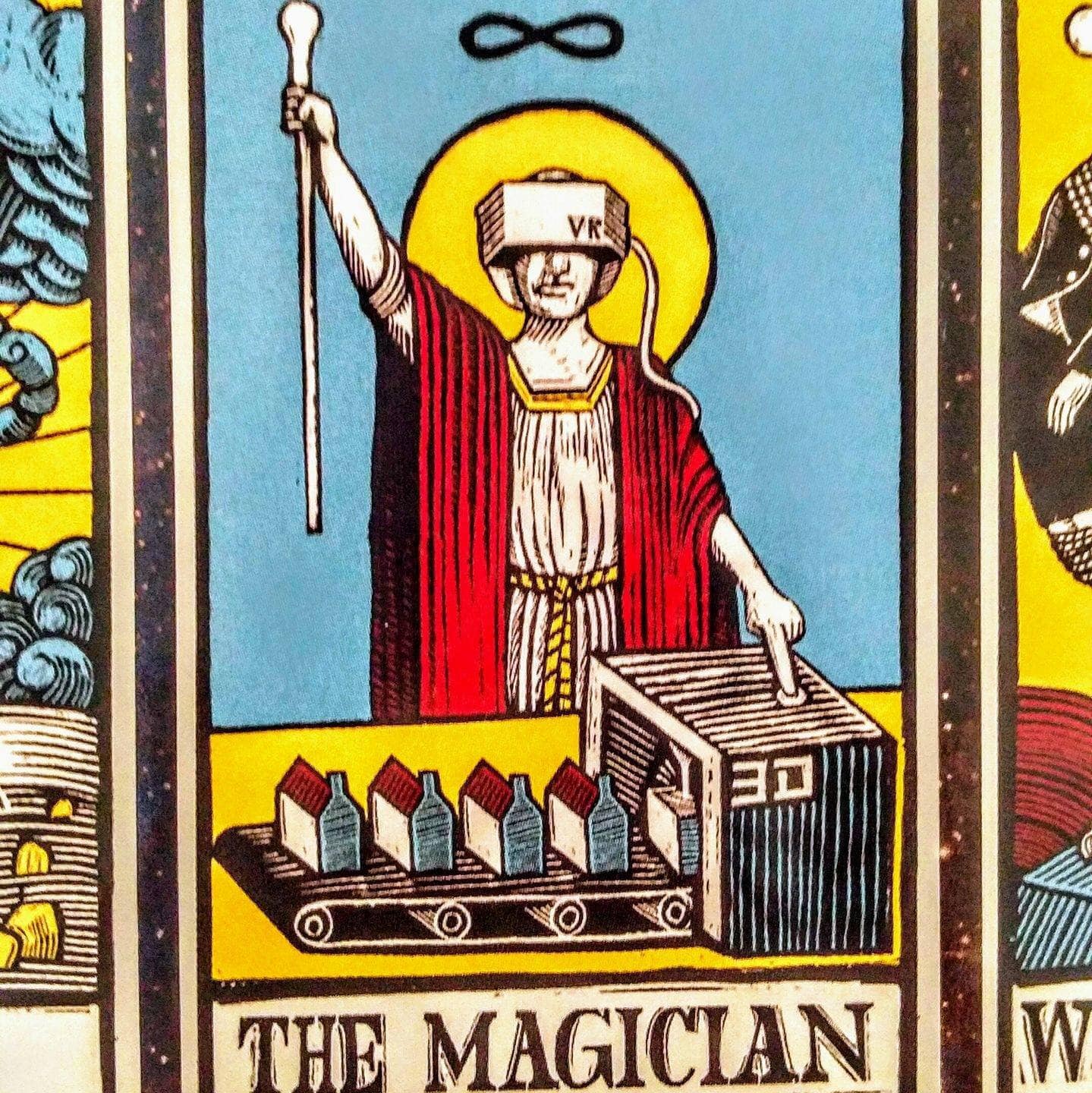
This meme uses the classic card of The Magician to symbolize the ultimate aim of transhumanism: the belief that technology will eventually merge our biological minds with digital consciousness to create a perfect, infinite existence. The figure is shown wearing a VR headset, symbolizing the integration of technology into the human experience itself. The infinity symbol above represents the limitless potential of a purely virtual world, while the text "VR" on the box indicates that we are living in a digital simulation.
simple-description (llama3.2-vision_11b)
In the context of transhumanism, the meme is a humorous commentary on the intersection of technology and human enhancement. The image depicts a person with a futuristic, high-tech body, but with a "brain" that's literally a computer chip, highlighting the potential for humans to upgrade their bodies with technology. The text "I can feel my neurons dying" is a tongue-in-cheek reference to the idea that even with advanced technology, humans are still vulnerable to the limitations of their own biology.
detailed-analysis (gemma3-27b-vision)
Okay, let's break down this striking and unusual tarot card image, applying the requested theoretical lenses. It's important to note that the impact of a theoretical lens hinges on interpretation, and multiple readings are always possible.
Visual Description
The image presents a reimagining of the traditional tarot card "The Magician." Instead of a figure conjuring elements, we see a figure in red robes, face obscured by a VR headset. The figure is holding a staff/wand aloft, and, critically, operates a conveyor belt upon which stand multiple miniature houses, almost like bottles on a bottling line. The background is a light blue, framed by decorative borders from neighboring cards. The card is labelled “THE MAGICIAN”. The visual aesthetic is inspired by traditional tarot imagery, but with a distinctly modern/futuristic technological twist. The overall impression is one of control, automation, and a potentially unsettling fusion of the mystical and the industrial.
Foucauldian Genealogical Discourse Analysis
This image offers fertile ground for a Foucauldian analysis. Foucault emphasized how "power/knowledge" operates through discourses. Here we see a redefinition of "magic." The traditional magician manipulated visible, elemental forces; this figure manipulates a system, a flow of “houses” through automation.
- Genealogy of “Magic”: Tracing the history of "magic" reveals a shift. It moved from visible ritual and the manipulation of natural forces to the increasingly invisible and abstract power of technology and systems control. This figure is a magician, but their power derives from technical mastery, not the supernatural.
- Discipline and Panopticism: The conveyor belt, with its flow of houses, evokes a sense of standardized production and control. The operator (the VR-clad figure) is seemingly all-seeing and controlling, though this is achieved through the technological mediation of the headset and the automated system. This echoes the panoptic structure, where surveillance and control are internalized through the perceived possibility of observation.
- Power/Knowledge: The figure's power resides in their knowledge of the system, and that knowledge grants them control over the houses (and potentially those within). The VR headset is the key point where knowledge and power merge. The system itself becomes a discourse, defining what is valued and controlling the flow of resources.
Critical Theory
Applying critical theory (specifically the Frankfurt School traditions of Adorno and Horkheimer) we can see the image as an illustration of the “dialectic of enlightenment” gone wrong.
- Instrumental Reason: The image emphasizes the dominance of instrumental reason – a focus on efficiency and control for its own sake. The houses are not seen as homes but as units to be processed and moved.
- Reification: The houses, and perhaps even the people within them, become reified – treated as objects rather than subjects. The conveyor belt symbolizes a process that strips away their inherent value.
- Culture Industry: The systematized production (the conveyor belt) can be seen as a microcosm of the "culture industry", where individuality is suppressed and mass-produced conformity is encouraged. The operator, lost in the virtual world of the headset, represents the individual alienated from their own labor and creativity.
Marxist Conflict Theory
From a Marxist perspective, the image powerfully depicts the alienation of labor and the commodification of housing.
- Means of Production: The conveyor belt represents the means of production, controlled by the figure with the VR headset. This individual represents the capitalist class, controlling the resources and the process of production.
- Commodification of Housing: The houses being moved on the conveyor belt are not presented as homes, but as commodities – objects to be bought, sold, and processed. This illustrates the capitalist tendency to turn even basic necessities into sources of profit.
- Alienation of Labor: While we don't see workers explicitly, the image suggests a system where labor is dehumanized. The houses are moved automatically, potentially displacing workers and reducing them to mere cogs in a machine. The operator is also alienated, disengaged from the physical reality of the production process.
- Class Conflict: Implicitly, the image hints at a power imbalance and potential for conflict between those who control the means of production and those who are subject to that control.
Postmodernism
The image is ripe for a postmodern interpretation.
- Simulacra & Simulation: The VR headset obscures reality, replacing it with a constructed experience. This is a core concept in Baudrillard's work – the loss of the real and the prevalence of simulations. The houses themselves may be simulations, existing only as data points within the system.
- Blurring of Boundaries: The image blurs the boundaries between the magical/spiritual and the technological/industrial. This challenges traditional categories and creates a sense of uncertainty.
- Fragmentation and Deconstruction: The image can be seen as a deconstruction of the traditional tarot archetype. It challenges the idea of a single, coherent meaning and invites multiple interpretations.
- Irony and Parody: The image is inherently ironic. It appropriates the symbolism of the magician (a figure associated with power and transformation) and subverts it through the use of technology.
Queer Feminist Intersectional Analysis
Applying an intersectional queer feminist analysis is more complex but still possible.
- Technological Disembodiment & Power Dynamics: The VR headset, while seemingly neutral, can be interpreted through a queer feminist lens as a technology that allows for disembodiment and a distancing from the material realities of power. The figure, hidden behind the headset, could represent a dominant power structure that operates from a removed and detached position.
- Commodification of the Home & Gendered Spaces: The commodification of housing has disproportionate impacts on marginalized groups, particularly women and LGBTQ+ individuals. The image could be seen as representing the systemic forces that contribute to housing insecurity and displacement, often exacerbated by gender and sexual orientation. The 'home' has long been constructed as a site of domesticity traditionally assigned to women, and the image's presentation of housing as commodity could challenge and disrupt those conventions.
- Control and Surveillance: The image highlights a power dynamic through control of the houses, reminiscent of structures like the patriarchy that control bodies.
In conclusion, this image is a potent and complex visual statement. Its layered symbolism allows for a variety of interpretations, all of which illuminate important social, political, and philosophical themes. It is a powerful illustration of the ways in which technology, power, and ideology intersect to shape our world.
simple-description (llama3.2-vision)
The meme is a humorous image of the "The Magician" card from a tarot deck, but with a twist. The Magician is now holding a VR headset and a controller, and the text "The Magician" has been replaced with "The Magician (with VR)".
tesseract-ocr
DSA \ Co \ ils ae le ; -. , Q . el ii ¢ a 7) | aa 1, iI i fl = P : aN | a") i i if Ay te tN ; a a Paci | LE a= 1 = < WW AW We SS EP i —~ SS > Ebb < i | | nih i cS MMIHELA Hes 07/7 “TRI THE MAGICLAN | AIW