First Seen
2023-05-10T21:03:42+00:00
simple-description (qwen3.5_2b-q8_0)
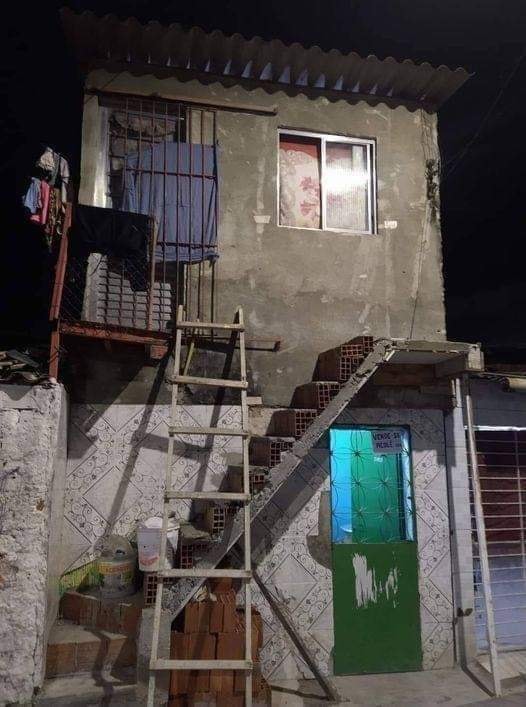
This meme critiques the decline and neglect of physical infrastructure in cities. On the left, a large wooden ladder and rough steps suggest a chaotic construction or renovation effort happening against a backdrop of crumbling, unfinished concrete walls. To the right, a bright green door displays the words "HOME" and "HOMELESS," explaining that the structure is a makeshift shelter for people without housing. Together, the peeling paint, the makeshift scaffolding, and the unfinished nature of the building illustrate a broken urban environment where planned cities crumble into places where homelessness is a constant, visible presence.
simple-description (llama3.2-vision_11b)
The meme is a photo of a dilapidated, abandoned building with a broken window and a makeshift ladder leading to a second-story entrance. The image is captioned "I just moved into a new apartment".
detailed-analysis (gemma3-27b-vision)
Okay, here's an analysis of the image broken down into the requested sections, based on the visible elements. I'll indicate when a section doesn't apply significantly. I’ll be interpreting, so these are potential readings, not definitive answers.
Visual Description
The image depicts a multi-story, somewhat ramshackle building, likely residential, at night. The building is constructed from a mix of materials: rough concrete/cement blocks, metal, and what appears to be some form of corrugated metal or sheeting. It’s notably pieced together – not sleek or architecturally planned – giving it an organic, improvised quality.
Key features include:
- Verticality: The building rises in tiers, seemingly built upwards incrementally.
- Metal Staircases: Two metal staircases zig-zag up the exterior of the building, appearing as functional but also somewhat precarious add-ons.
- Windows & Doors: The windows are varied in size and style, some with grates or bars, suggesting security concerns or a lack of resources. One door is particularly striking – a green and blue door with layered posters/flyers attached.
- Laundry: Clothes are hanging from a red metal rack on the top level, suggesting this is a lived-in space.
- Lighting: The scene is lit artificially, casting stark shadows and highlighting the texture of the building materials. The light source seems to be positioned above and to the left, creating dramatic contrasts.
- Context: The surrounding context is largely dark, suggesting an urban, possibly impoverished, setting.
Foucauldian Genealogical Discourse Analysis
This image lends itself well to a Foucauldian reading focusing on power/knowledge formations. The building itself, in its improvised state, can be seen as a manifestation of power relations.
- Discipline & Surveillance: The metal bars on the windows aren't just aesthetic choices; they are physical expressions of the need for control and surveillance – a response to perceived threats (real or constructed) or the enforcement of norms. The building becomes a site of disciplinary practices, shaping the behavior of its inhabitants through the very structures that contain them.
- The Normal/Abnormal: The way this building is built – not according to established architectural codes – immediately flags it as "different." This can be linked to the creation of categories of "normal" and "abnormal" building practices. What led to this unconventional construction? Was it economic necessity, lack of official permits, or other factors that placed its builders outside the normative frameworks of urban development?
- The History of Building Practices: A genealogical approach would investigate the history of how this building came to be. What regulations (or lack thereof) allowed it to be built in this way? What materials were available? What socio-economic conditions spurred the need for such a structure? Tracing this history reveals the power dynamics embedded in the very act of building.
- The Green Door: The layered posters/flyers on the door are a fascinating element. They represent a palimpsest of competing discourses, potentially political, commercial, or personal. This door becomes a site where multiple voices and ideologies intersect and compete for space.
Critical Theory
This image evokes themes central to Critical Theory, particularly those concerning alienation, social stratification, and the built environment.
- Alienation & The Built Environment: The building’s haphazard construction and seemingly precarious state can be interpreted as a manifestation of alienation. The inhabitants may be alienated from traditional systems of urban planning, resources, or power, leading to this unconventional, self-built structure. The building itself becomes a symbol of marginalization.
- Spatial Justice: The building’s location and appearance raise questions about spatial justice – the equitable distribution of resources and opportunities within space. Is this building located in an underserved or marginalized area? Does its construction reflect a lack of access to adequate housing or building materials?
- The Social Construction of Space: The building is not simply a physical structure; it’s a social product. Its form reflects the social, economic, and political forces that have shaped its creation. It is a material expression of social inequalities.
Marxist Conflict Theory
The image readily lends itself to a Marxist analysis, highlighting class struggle and the material conditions of life.
- Class & Housing: The building’s construction suggests a lack of access to standard, well-maintained housing. It likely represents the living conditions of a working-class or impoverished population. The building’s materials and construction quality starkly contrast with the structures found in wealthier areas, highlighting the vast disparity in resources.
- Means of Production & Housing: The construction of this building can be seen as a form of self-provisioning, a response to the failure of capitalist systems to provide adequate housing for all. The inhabitants are taking control of their own shelter, essentially becoming their own builders and producers.
- Superstructure & Base: The building can be seen as part of the “superstructure” (the social, political, and ideological institutions) that emerges from the “base” (the economic and material conditions of life). The building's state reflects the underlying economic inequalities and struggles of the population.
Postmodernism
The image has elements consistent with a postmodern aesthetic.
- Deconstruction of Architecture: The building rejects traditional architectural norms and conventions. It is a fragmented, layered structure that embraces improvisation and functionality over aesthetic coherence.
- Hybridity and Pastiche: The mix of materials and building techniques creates a hybrid aesthetic. It’s not a single, unified style but a pastiche of different elements.
- Rejection of Grand Narratives: The building challenges the idea of a universal, “correct” way to build. It embraces local, practical solutions over top-down planning.
- The Loss of Authenticity: The layered posters and haphazard nature of the structure suggest a loss of a singular, "authentic" aesthetic.
Queer Feminist Intersectional Analysis
This is the area that requires the most inferencing, as the image doesn’t directly depict individuals or explicitly signal gender or sexuality. However, it's possible to apply an intersectional lens:
- Vulnerability and Marginalization: The building, by its very condition, suggests a level of vulnerability and marginalization experienced by its inhabitants. Queer and feminist theories often center on the experiences of marginalized groups.
- Space and Safety: The building’s makeshift construction and potential lack of security (indicated by the bars on windows) raise questions about safety and security. Queer and feminist analysis frequently explores how space can be used to control and oppress marginalized groups.
- Self-Creation and Resistance: The act of self-building, of creating a home out of limited resources, can be seen as a form of resistance against systemic oppression. It's an assertion of agency and a refusal to accept pre-defined norms.
- Intersectionality: The lived experience of individuals within this space is likely shaped by a complex interplay of factors, including class, gender, sexuality, ethnicity, and immigration status. These intersecting identities would shape their experiences of vulnerability, resilience, and resistance.
I hope this detailed breakdown provides a useful and nuanced analysis of the image! Let me know if you'd like me to elaborate on any particular aspect.
simple-description (llama3.2-vision)
This meme is an image of a small, rundown house with a broken window and a door that appears to be slightly ajar. The text "I'm not arguing, I'm just explaining why I'm right" is often overlaid on top of the image, but in this case, it's not present. The image is likely being used to humorously describe a situation where someone is trying to justify or explain their own behavior.
tesseract-ocr
PO Sl | adi; 4 i Pr =e ge i Hf | I | | } o a en. ae} Ae = ge , as ae! met ae = ee ee a oa sma i= : i ao, ea \e “ f Cn ee) ae = vee ey 2 iN