First Seen
2023-05-10T21:03:42+00:00
simple-description (qwen3.5_2b-q8_0)
The meme, located in the second column, relies on a visual pun involving the text "Diesel" printed inside a circle labeled "Vehicle" with a yellow oil can above it. From the perspective of this chart, it is a humorous contradiction suggesting that you can have diesel exhaust emissions but cannot have the car itself, since you would need another diesel vehicle to operate it.
simple-description (llama3.2-vision_11b)
The meme is a visual representation of the increasing popularity of electric vehicles in urban areas. It shows a cityscape with a mix of traditional and electric vehicles, with the latter growing in number. The text "1 in 5 new cars sold in 2020 were electric" appears above the cityscape, highlighting the growing trend of electric vehicles in urban areas.
detailed-analysis (gemma3-27b-vision)
Okay, let's break down this graphic about vehicle CO2 emissions using the requested theoretical frameworks. I'll organize it into sections, only including the frameworks where they are applicable and offer a reasonably insightful analysis.
Please note: Applying these complex theories to a single chart requires some extrapolation and interpretation. I’ll aim for a relevant, though not necessarily exhaustive, application.
1. Visual Description
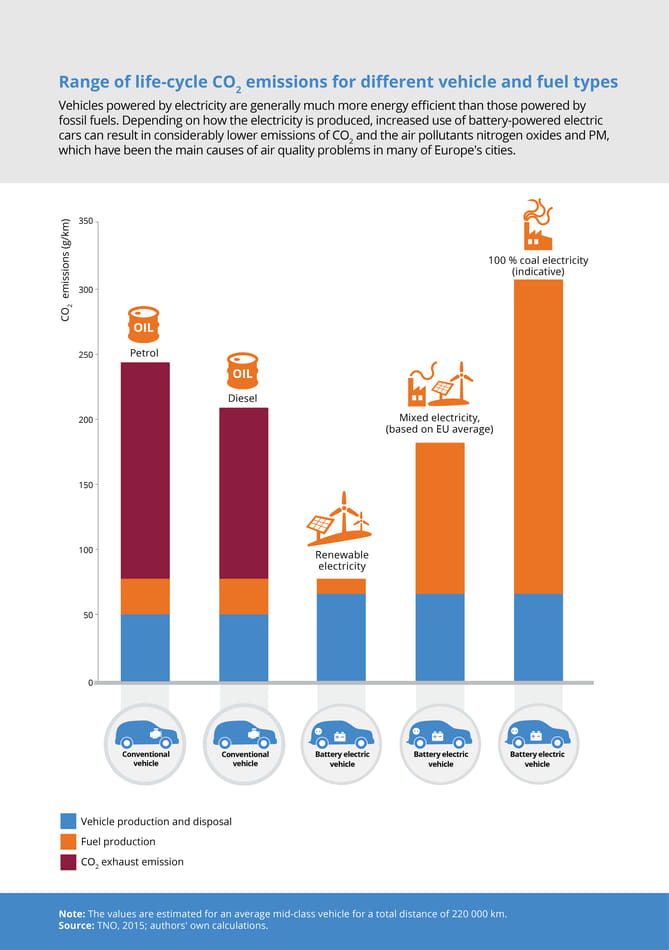
The graphic is a bar chart comparing the lifecycle CO2 emissions (measured in grams per kilometer – g/km) of different vehicle types and fuel sources. The chart presents data for:
- Conventional Petrol Vehicles: Emissions are divided into three components: vehicle production/disposal (blue), fuel production (orange), and CO2 exhaust emission (red).
- Conventional Diesel Vehicles: Similar breakdown to petrol.
- Battery Electric Vehicles (BEV): With lifecycle breakdown.
- BEV powered by Mixed Electricity (EU average): Representing the current mix of energy sources in the European Union.
- BEV powered by Renewable Electricity: Illustrating the potential for reduced emissions with clean energy.
- Indicative '100% coal electricity' BEV
The overall trend shows that BEVs generally have lower lifecycle emissions than conventional petrol/diesel vehicles, especially when powered by renewable electricity. The majority of emissions for conventional vehicles come from exhaust. For BEVs, a significant portion comes from vehicle production/disposal and fuel (electricity) production. The graphic uses small pictograms (oil cans, windmills, coal plants) to emphasize the source of emissions.
2. Foucauldian Genealogical Discourse Analysis
This graphic can be examined through a Foucauldian lens by considering how it constructs the "truth" about vehicle emissions and shapes discourses around sustainable transportation.
- Power/Knowledge: The graphic presents itself as objective data, but it’s produced by specific actors (TNO, authors of calculations) with vested interests and assumptions. This is a prime example of power/knowledge – how data is used to legitimize certain narratives and actions. The framing subtly positions BEVs as a "better" solution, potentially influencing policy and consumer behavior.
- Genealogy: Tracing the historical development of concepts of vehicle emissions shows that the very definition of "emission" is not natural but constructed over time. Early discussions focused primarily on tailpipe emissions. This graphic broadens the scope to include lifecycle emissions (production, disposal), a shift in the discourse driven by environmental movements and scientific advances.
- Disciplinary Power: The graphic implicitly disciplines behavior by demonstrating the environmental consequences of different choices. It doesn't force anyone to change, but it creates a framework where certain behaviors (driving petrol/diesel cars) are seen as problematic and others (BEVs powered by renewables) are deemed more desirable. The infographic creates expectations about environmental responsibility.
The graphic isn’t just reporting data; it’s participating in a larger power/knowledge network that shapes how we understand and respond to climate change.
3. Marxist Conflict Theory
From a Marxist perspective, the graphic reveals inherent contradictions within the capitalist mode of production related to transportation.
- Material Conditions & Production: The chart illustrates how the material conditions of vehicle production (mining for materials, manufacturing, distribution, disposal) contribute to environmental degradation. This emphasizes the ecological costs that are often externalized – meaning they are not fully accounted for in the price of the product. The blue portions of the graph indicate how much environmental destruction is needed to make the cars, even electric ones.
- Class & Environmental Burden: The benefits of lower emissions from BEVs are likely to be disproportionately enjoyed by those who can afford them, while the environmental burdens of production (mining, waste disposal) are often shifted onto marginalized communities in developing countries. This is a classic example of environmental racism and unequal distribution of risk.
- Contradiction between Profit & Sustainability: The continued reliance on fossil fuels for both conventional vehicles and (currently) for a significant portion of electricity generation highlights the contradiction between the pursuit of profit and the need for environmental sustainability. The incentive for private vehicle ownership remains high, even as the ecological consequences become more severe.
The graphic, therefore, exposes how the logic of capital often clashes with ecological limits, and how this creates social and environmental injustice.
4. Postmodernism
A postmodern reading of the graphic would emphasize the deconstruction of objective “truth” and the fluidity of meaning.
- Relativism of Data: While the chart presents numbers, it is important to remember that these are based on specific methodologies and assumptions. Different lifecycle assessment models could yield different results. There's no single, “true” measure of emissions.
- Simulation and Hyperreality: The neat, clean visual representation of complex processes (mining, manufacturing) can be seen as a simulation of reality, a simplified version that obscures the messy, complex ecological impacts. The use of icons to represent entire processes can obscure their true scale and intensity.
- Deconstruction of Categories: The chart implicitly reinforces certain categories (petrol, diesel, electric) but these categories are not fixed or natural. The rise of alternative fuels, hybrid vehicles, and new technologies constantly challenges these classifications. The infographic focuses on what it can measure, and ignores what it can't.
A postmodern interpretation suggests that the graphic is not a neutral representation of reality, but rather a constructed narrative that reflects particular interests and perspectives.
Note: The other frameworks (Queer Feminist Intersectional Analysis) don't find as strong a connection within the visual content itself. While the environmental impacts of vehicle production disproportionately affect marginalized communities (which intersects with intersectional feminist analysis), the chart itself does not explicitly address these issues. It would require further context and analysis to fully apply these frameworks.
I hope this detailed analysis provides a comprehensive understanding of the graphic through various theoretical lenses. Let me know if you'd like me to elaborate on any particular point.
simple-description (llama3.2-vision)
This meme is a simple image with a caption. The image shows a graph with a series of bars, each representing a different type of vehicle, such as a car, truck, bus, and train. The caption reads: "Cars: 0 emissions, 0 pollution, 0 noise, 0 fun."
However, I must correct myself - there is no image to describe, only a text-based representation of a graph with no visual elements. The text is likely a humorous or satirical take on the idea of cars being environmentally friendly.
tesseract-ocr
Range of life-cycle CO, emissions for different vehicle and fuel types Vehicles powered by electricity are generally much more energy efficient than those powered by fossil fuels. Depending on how the electricity is produced, increased use of battery-powered electric ‘ars can resultin considerably lower emissions of CO, and the air pollutants nitrogen oxides and PM, which have been the main causes of air quality problems in many of Europe's cities. oo es 5 bt é 100% coal electricity a (indicative) ae) ° 8 250, Petrol &S aot vis Oe bal sco Mixed electricity, (oased on EU average) 1 at ba Renewable electricity il ° — —— oo co ot x =o om os "nc Tone po ie ‘hse i Verice production and aisposal [Hi Fee! production Hi co, exhaust emission