First Seen
2024-02-18T06:00:13.007293+00:00
simple-description (qwen3.5_2b-q8_0)
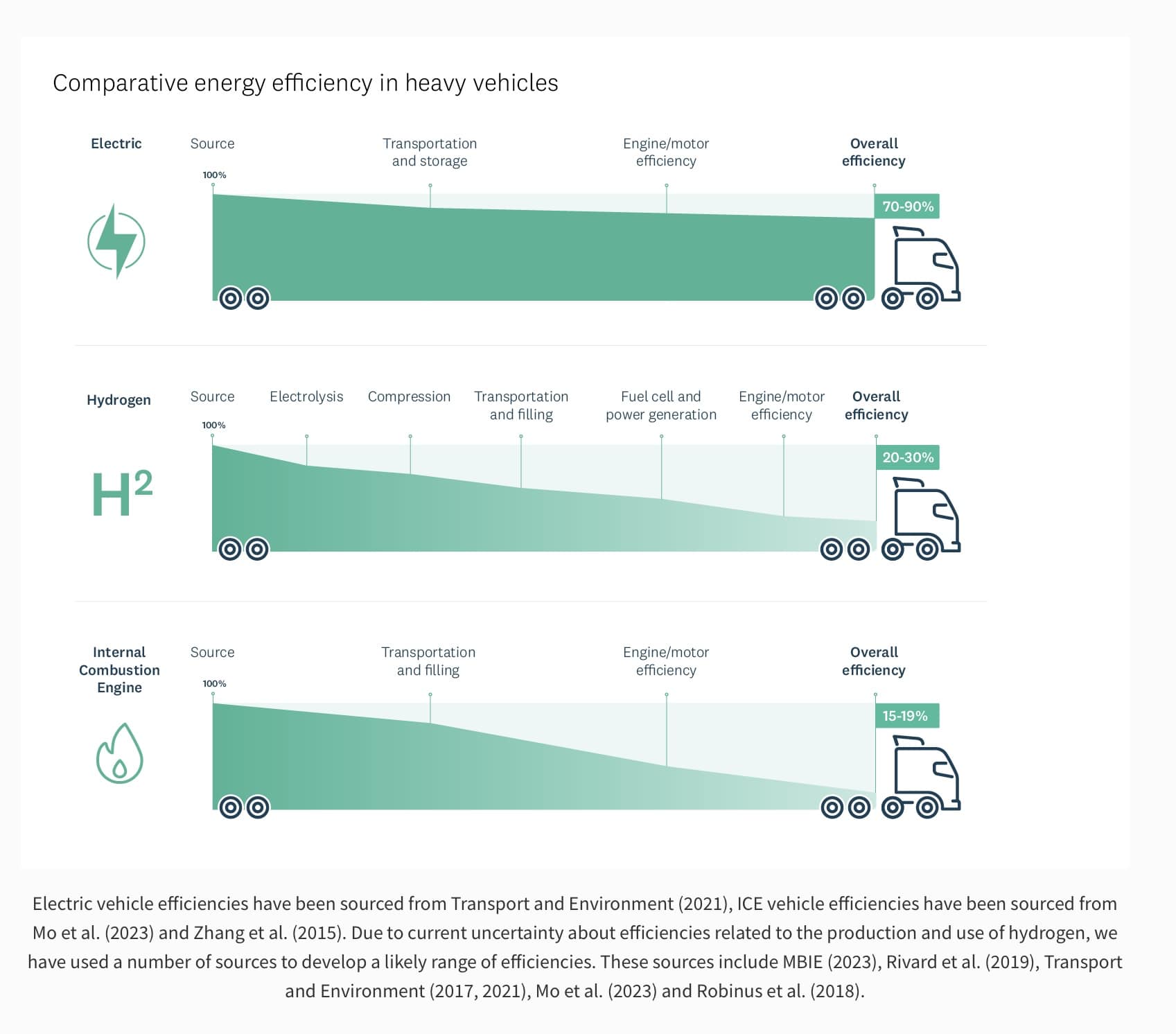
In the context of urbanism, this chart compares the overall energy efficiency of heavy vehicles powered by electric, hydrogen, and traditional internal combustion engines. It highlights that electric vehicles achieve a 70-90% overall efficiency, which is significantly higher than the 15-19% efficiency of traditional internal combustion engines. Hydrogen technology is positioned between these two extremes with a rating of 20-30%.
simple-description (llama3.2-vision_11b)
The meme is a visual representation of a chart comparing the efficiency of different energy sources in electric vehicles. It shows a truck with a decreasing efficiency graph, with a humorous caption: "When you realize you're not even getting 1% of the power you need". The text implies that electric vehicles are not as efficient as they claim to be, and the joke is that the truck's efficiency is so low that it's almost non-existent.
detailed-analysis (gemma3-27b-vision)
Okay, let's break down this graphic, applying the requested theoretical lenses where appropriate.
Visual Description
The image presents a comparative energy efficiency flow chart for three types of heavy vehicle power sources: Electric, Hydrogen, and Internal Combustion Engine (ICE). Each section of the chart visually depicts the energy flow, starting at 100% source energy and decreasing at each stage of processing/conversion to final vehicle output.
- Structure: Each section is laid out identically. A vertical bar represents energy, starting at 100% and diminishing at each step. Each step (e.g., "Electrolysis", "Compression", "Transportation and filling") is labeled, and the resulting decrease in energy is visually indicated by a descending, tiered bar graph. At the end, a small cartoon truck symbolizes the final output.
- Color Scheme: Blue is used for each bar, with lighter shades indicating energy loss at each stage.
- Efficiency Numbers: The overall efficiency (from source to vehicle) is displayed as a percentage at the far right, indicating 70-90% for Electric, 20-30% for Hydrogen, and 15-19% for ICE.
- Symbols: Each section begins with a symbol representing the power source (lightning bolt for electric, H2 for hydrogen, droplet for ICE).
Foucauldian Genealogical Discourse Analysis
This graphic is a discourse – a system of thought, ideas, and practices that shapes our understanding of energy and vehicles. A Foucauldian analysis would focus on how this depiction of efficiency constructs “truth” around these technologies, and how power operates through this knowledge.
- Power/Knowledge: The graphic produces the knowledge of efficiency, but that knowledge isn’t neutral. It’s created through specific methodologies and presents a quantifiable "truth." This "truth" then becomes a tool for shaping policy, investment, and public perception. The selection of which stages to include in the efficiency calculations (e.g., the entire hydrogen production chain vs. just fuel cell operation) is a power move, subtly shaping the narrative.
- Genealogy: Tracing the historical genealogy of “efficiency” as a concept reveals it isn’t a fixed, objective measure. Instead, it’s a historically contingent concept that has evolved in response to changing technological, economic, and political contexts. This graphic participates in that ongoing history, establishing a new benchmark for comparison.
- Normalization: By presenting efficiency as a simple numerical metric, the graphic normalizes this way of thinking about energy. It subtly suggests that efficiency is the most important factor, potentially overshadowing other important considerations like environmental impact, social equity, or resource depletion.
Critical Theory
A critical theory approach views this graphic through the lens of ideology and how it reinforces dominant power structures.
- Ideology: The graphic implicitly supports a techno-optimistic ideology – the belief that technological solutions are the primary answer to environmental and energy problems. It focuses on how to make technologies more efficient, rather than questioning the underlying systems of consumption and production that drive energy demand.
- Instrumental Rationality: The emphasis on quantifiable efficiency embodies Max Horkheimer and Theodor Adorno’s concept of "instrumental rationality." Everything is assessed by its usefulness in achieving a particular goal (in this case, maximizing energy output). This can lead to a disregard for ethical, social, or ecological considerations.
- Domination: The graphic subtly reinforces the dominance of certain technologies. Electric vehicles are presented as the most efficient, implicitly validating investments in that technology and potentially marginalizing alternative approaches.
Marxist Conflict Theory
A Marxist interpretation would focus on the economic and class dimensions of energy production and consumption.
- Means of Production: The graphic highlights the energy "flow" which can be viewed as the control and ownership of the "means of production" (energy sources, infrastructure, technology). Those who control these means (e.g., energy companies, automakers) benefit from the narrative presented.
- Class Interests: The promotion of electric vehicles could be seen as benefiting certain classes – those who can afford these vehicles and the necessary infrastructure. The graphic doesn't address the potential for increased resource extraction or the environmental impact of battery production, which often disproportionately affects marginalized communities.
- Capital Accumulation: The drive for efficiency is ultimately tied to capital accumulation. More efficient technologies allow for increased production and consumption, which drives economic growth (and profits) for those who own the means of production.
Postmodernism
A postmodern lens would challenge the idea of a single, objective “truth” about energy efficiency.
- Deconstruction: The graphic presents a seemingly straightforward narrative of efficiency, but a postmodern analysis would "deconstruct" this narrative, revealing its underlying assumptions, biases, and power dynamics.
- Relativism: Postmodernism would question the idea that efficiency is a universally valid measure. What constitutes "efficiency" depends on one's perspective, values, and goals.
- Simulacra and Simulation: The graphic itself can be seen as a “simulacra” – a representation of reality that has become detached from the underlying reality. The numbers and charts create an illusion of precision and objectivity, but they are ultimately simplifications of complex systems.
Note: A Queer Feminist Intersectional Analysis would not be applicable in this case as the graphic does not deal with those topics. It does not discuss identity, gender, or social justice issues.
Let me know if you'd like me to expand on any of these theoretical perspectives, or to apply them to a specific aspect of the graphic!
simple-description (llama3.2-vision)
The meme is a humorous comparison of the efficiency of different modes of transportation. It features a graph with a series of vehicles, each labeled with its type (e.g. "Electric", "Hydrogen", and "Internal Combustion") and a percentage representing its efficiency. The text "1% of the energy you put in is used for actual work. The rest is wasted as heat." is written above the graph.
tesseract-ocr
Comparative energy efficiency in heavy vehicles Electric Source Transportation Engine/motor Overall and storage efficiency efficiency 100% 1 l t | eer Hydrogen Source Electrolysis | Compression Transportation Fuel cell and Engine/motor Overall 100% and filling power generation efficiency efficiency «SE [a Internal Source Transportation Engine/motor Overall Combustion and filling efficiency efficiency Engine avr “ © — in Electric vehicle efficiencies have been sourced from Transport and Environment (2021), ICE vehicle efficiencies have been sourced from Mo et al. (2023) and Zhang et al. (2015). Due to current uncertainty about efficiencies related to the production and use of hydrogen, we have used a number of sources to develop a likely range of efficiencies. These sources include MBIE (2023), Rivard et al. (2019), Transport and Environment (2017, 2021), Mo et al. (2023) and Robinus et al. (2018).