First Seen
2023-08-11T19:48:35+00:00
simple-description (qwen3.5_2b-q8_0)
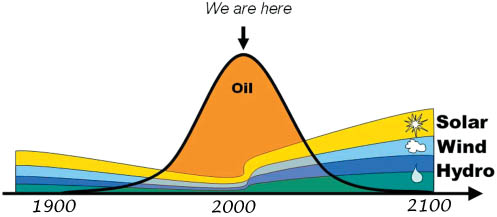
Based on the Urbanism - Energy category, this graph shows how our cities have changed their fuel dependence. The massive, peaked wave labeled "Oil" represents the dominant role that petroleum played in powering urban growth during the early 20th century. The layers underneath now labeled Solar, Wind, and Hydro show the current trend of shifting away from fossil fuels toward cleaner, renewable energy sources.
simple-description (llama3.2-vision_11b)
The meme is an image of a cityscape with a large, dark cloud looming over it, with the words "Climate Change" written above it. The image is meant to be humorous and ironic, as it depicts a city struggling to cope with the effects of climate change, which is often associated with rising temperatures and extreme weather events. The image is captioned "We're all gonna die" in a tongue-in-cheek reference to the impending doom of climate change.
detailed-analysis (gemma3-27b-vision)
Okay, here’s an analysis of the image, broken down into the sections you requested. Some sections won’t apply as strongly as others, and I’ll explain why.
Visual Description
The image is a stacked area chart representing the relative usage or prevalence of different energy sources over time, from 1900 to 2100. The x-axis represents time (years), and the y-axis is not explicitly labeled, but can be inferred to be a scale representing relative energy usage/contribution.
The chart is divided into areas representing four energy sources:
- Hydro: A blue area at the bottom, relatively stable through much of the period, but tapering off in the later years.
- Wind: A lighter blue area above hydro, growing in the later years, though smaller in overall contribution.
- Solar: A yellow area appearing mostly in later years, with significant growth projected into the future.
- Oil: A large, orange area dominating the chart in the late 20th and early 21st centuries. The area forms a pronounced peak, representing a period of intensive oil usage. It starts high in 1900, grows rapidly, peaks around 2000, and is then projected to decline.
An arrow pointing down from the top of the oil peak is labeled "We are here," indicating the current time/situation.
Foucauldian Genealogical Discourse Analysis
This image is powerfully generative of a Foucauldian analysis. Foucault's genealogy examines how "truths" (in this case, regarding energy) are not neutral or universally valid, but are constructed through historical power relations.
- Discourse & Power/Knowledge: The chart is a discourse, a system of thought, knowledge, and language that shapes our understanding of energy. The very act of graphing these sources creates a particular narrative. The prominence of the oil peak asserts oil as the dominant, central "truth" of the 20th century. It positions oil as necessary for growth and modernity, a "truth" enforced through political, economic, and social structures.
- Archaeology of Knowledge: Tracing the historical "rules" governing how energy sources are categorized and valued is key. Before the 20th century, hydro and other sources were more prominent, but the "rules" shifted—driven by technological advancements, geopolitical interests, and economic incentives—to prioritize oil.
- Power Relations: The chart reveals power relations embedded in the production and consumption of energy. Oil's dominance isn't simply a matter of efficiency. It’s tied to control of resources, geopolitical influence, and the power of oil companies. The projected rise of wind and solar can be read as a potential disruption of these power relations, though the chart doesn’t guarantee a smooth transition.
- Disciplinary Power: The chart subtly reinforces disciplinary power by normalizing the idea of continuous energy growth. The focus on increasing contribution from all sources, implies a lack of focus on energy conservation or reduction in energy demand.
Critical Theory
This image is ripe for a Critical Theory reading, which seeks to expose the underlying power structures and ideologies that maintain social inequalities.
- Ideology: The chart implicitly embodies a specific ideology – one that prioritizes economic growth and technological "solutions" over systemic change. The implicit belief is that substituting oil with other sources will solve the problem without addressing the underlying issues of unsustainable consumption and inequality. It masks the social and environmental costs of oil's dominance, such as pollution, climate change, and geopolitical conflicts.
- Hegemony: The chart can be seen as reinforcing the hegemony of fossil fuel capitalism. Hegemony, in Gramsci's sense, is the dominance of a particular worldview not through force, but through consent. By presenting oil's rise as a natural progression, the chart normalizes a system that benefits a select few at the expense of many.
- Commodification: The chart implicitly treats energy as a commodity, something to be produced and consumed for profit. It doesn’t address the fundamental question of need versus greed.
- The "Technological Fix": The growing areas of solar and wind suggest a "technological fix" to the energy crisis. Critical theory would be skeptical of this approach, arguing that it avoids the deeper structural changes needed to create a truly sustainable and equitable energy system.
Marxist Conflict Theory
A Marxist analysis would emphasize the inherent class conflict embedded in energy production and consumption.
- Means of Production: The oil industry represents the "means of production" in this chart – control over the resources and infrastructure necessary to generate energy. This control is concentrated in the hands of a relatively small number of powerful corporations and states.
- Class Struggle: The benefits of oil's dominance (cheap energy, economic growth) have accrued disproportionately to the capitalist class, while the costs (pollution, environmental damage, geopolitical conflicts) are borne by the working class and marginalized communities.
- Exploitation: The extraction, processing, and distribution of oil involve the exploitation of both natural resources and labor.
- Contradictions: The chart reveals the inherent contradictions of capitalism: the drive for endless growth on a finite planet. The peak of oil suggests that this system is unsustainable, and the rise of renewables could be seen as a struggle to transition to a new mode of production.
- Capital accumulation: Oil's peak represents the largest period of capital accumulation for those who controlled the industry.
Postmodernism
A postmodern reading would deconstruct the chart’s claims to objectivity and universal truth.
- Meta-narratives: The chart embodies a “meta-narrative” – a grand story about progress and technological advancement. Postmodernism rejects these meta-narratives, arguing that they are inherently biased and exclusionary.
- Deconstruction: A postmodern analysis would deconstruct the chart’s categories (hydro, wind, solar, oil), revealing them to be socially constructed and contingent. What counts as "energy" or "renewable" is not fixed, but depends on cultural and political contexts.
- Relativism: Postmodernism emphasizes the relativity of truth and knowledge. There is no single "correct" way to represent energy usage. The chart is just one possible interpretation, shaped by the perspective and interests of its creator.
- Simulacra & Simulation: One could argue the chart is a 'simulacrum', a copy without an original. It’s a representation of representation—data derived from measurements, interpreted and visualized, losing any direct connection to the physical reality of energy consumption.
Queer Feminist Intersectional Analysis
This section is the trickiest, as the chart doesn't explicitly address issues of gender, sexuality, or intersectionality. However, a queer feminist analysis can illuminate the hidden power dynamics embedded in the energy system.
- Unequal Impacts: The environmental and social costs of oil production (pollution, environmental degradation, displacement) disproportionately affect marginalized communities – including women, people of color, Indigenous populations, and LGBTQ+ individuals.
- Gendered Labor: The labor involved in the energy industry (extraction, refining, maintenance) is often gendered, with women and marginalized communities performing the most dangerous and precarious jobs.
- Resource Colonialism: The control of oil resources has historically been linked to colonialism and imperialism, often involving the exploitation of land and people in the Global South. This exploitation is often intertwined with patriarchal and heteronormative systems of power.
- Energy Poverty: Access to affordable and reliable energy is not equally distributed. Women and marginalized communities are often disproportionately affected by energy poverty.
- Interlocking Oppressions: The chart implicitly ignores the interlocking oppressions that shape access to and control over energy resources. A queer feminist analysis would ask: Who benefits from this system? Who suffers? And how are these power dynamics shaped by gender, sexuality, race, class, and other social categories?
- Care work: Energy production and consumption is heavily reliant on unpaid or underpaid care work, particularly in communities affected by energy extraction. This is often performed by women, and is not reflected in the chart.
I hope this comprehensive breakdown is helpful! Let me know if you'd like me to elaborate on any of these points.
simple-description (llama3.2-vision)
The meme is a simple, hand-drawn illustration of a mountain with a flat top and a slope. At the top of the mountain, in bold, block letters, is written "Peak Oil". Below the mountain, in smaller text, is written "Now what?"
tesseract-ocr
We are here ‘Solar Wind Hydro 1900 2000 2100