First Seen
2023-05-10T21:03:42+00:00
simple-description (qwen3.5_2b-q8_0)
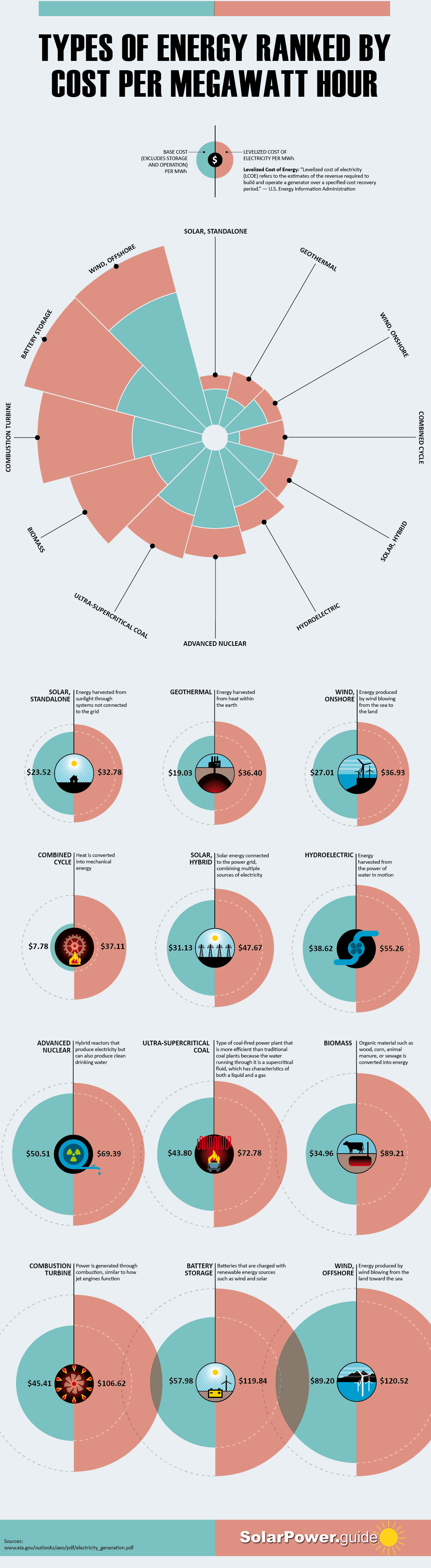
The "meme" is the text definition of the Levelized Cost of Energy (LCOE) presented at the top of the infographic.
It defines LCOE as the estimates of the revenue required to build and operate a generator over a specified cost recovery period.
This text serves as the analytical framework for the charts, explaining the stark cost disparities between renewable sources (low LCOE, teal) and fossil fuels (high LCOE, orange) within the "Urbanism - Energy" context.
simple-description (llama3.2-vision_11b)
The meme appears to be a humorous illustration of a city's energy consumption, with a giant electricity bill being thrown out of a window. The text "I just got my electricity bill and I'm FUMING" is written above the image, implying that the person is upset about the high cost of their energy consumption. From the perspective of the Urbanism - Energy category, this meme is a lighthearted commentary on the high cost of living in a city, where energy consumption is a significant expense.
detailed-analysis (gemma3-27b-vision)
Okay, let's break down this image of energy cost rankings, analyzing it through the lenses you've requested. It's a complex ask, as not all frameworks are directly applicable. I'll provide sections for those that are, and explain why others are less suitable.
I. Visual Description
The image is a radial chart depicting the cost per megawatt hour of various energy sources. The chart resembles a sunburst or flower with concentric rings. Each ring represents a category of energy and each petal within the ring represents a specific energy technology.
- Color Coding: The color scheme is primarily reds, oranges, and blues, which likely denotes cost – with reds/oranges potentially indicating higher costs and blues lower.
- Data Presentation: The size of each “petal” (segment) is proportional to its cost per megawatt hour. Numbers are included within each segment to provide precise values.
- Icons: Each segment features a small icon representing the energy source (e.g., a turbine for wind, a coal block for coal).
- Energy Sources Represented: The chart includes a variety of energy sources: fossil fuels (coal, natural gas), renewables (solar, wind, hydroelectric, geothermal, biomass), nuclear, and battery storage.
- Overall Impression: The chart is designed to visually compare the relative costs of different energy sources, highlighting the most and least expensive options. It appears geared toward consumers or policymakers interested in energy economics.
II. Foucauldian Genealogical Discourse Analysis
This image is suitable for Foucauldian analysis. It isn’t just about “facts” of cost, but rather how these costs are constructed as a form of knowledge and power.
- Discourse of Efficiency and Cost: The very act of ranking energy sources by cost establishes a discourse of economic efficiency. This discourse defines what is considered "good" energy (cheap) and "bad" (expensive). It implicitly frames cost as the primary criterion for evaluating energy options.
- Power/Knowledge: The construction of these cost numbers isn’t neutral. It requires a complex web of economic modeling, data collection, accounting practices, and political decisions. The entities that control these processes – government agencies, energy companies, research institutions – wield power through their ability to define and measure energy costs.
- Genealogy of "Cost": A genealogical approach would trace the historical development of "cost" as a concept in energy policy. How did we come to prioritize cost over other factors (environmental impact, social equity, energy independence)? This would reveal the power dynamics that have shaped our current energy system.
- Normalization: The chart normalizes a specific way of thinking about energy. By presenting cost as the primary metric, it subtly discourages consideration of alternative values or criteria.
- The image is a manifestation of "governmentality," a Foucaultian concept. It is a tool used to govern and shape behaviors regarding energy consumption and production by establishing norms and expectations around cost.
III. Critical Theory
This image lends itself well to Critical Theory, especially concerning the role of technology and ideology.
- Technological Rationality: The chart exemplifies “technological rationality” – the idea that technology can solve problems through objective, quantifiable data. The emphasis on cost implies that energy choices should be made based on purely rational calculations.
- Instrumental Reason: The focus on cost is an example of "instrumental reason" – valuing things only for their usefulness in achieving a particular goal (in this case, minimizing energy costs). This overlooks the broader social, environmental, and ethical implications of different energy sources.
- Ideology of Market-Based Solutions: The chart implicitly promotes the ideology of market-based solutions to energy problems. By presenting cost as the primary factor, it suggests that the market will naturally favor the most efficient and desirable energy sources. This obscures the ways in which market forces can be manipulated or distorted by powerful interests.
- Hidden Assumptions: The chart obscures certain power structures or environmental impacts. A critical analysis might question what costs aren’t included in the calculations (e.g., environmental remediation, health impacts, social justice concerns).
IV. Marxist Conflict Theory
Conflict theory is highly applicable here, as energy is a key resource subject to class struggle and capital accumulation.
- Resource Control: The chart highlights the uneven distribution of access to and control over energy resources. Cheaper energy sources (like coal, although declining) have historically been controlled by powerful corporations, while more sustainable sources (like solar) may be less accessible to certain communities.
- Capital Accumulation: The prioritization of cost reflects the drive for capital accumulation within the energy sector. Companies are incentivized to minimize costs in order to maximize profits, even if this comes at the expense of environmental sustainability or social equity.
- Class Interests: The chart implicitly reflects the interests of capital. Lower costs benefit energy companies and consumers (to a degree) but may not address the needs of marginalized communities or the planet.
- Exploitation: The extraction and processing of energy resources (particularly fossil fuels) often involve the exploitation of labor and natural resources. The chart doesn’t reveal these hidden costs.
- Conflicts of Interest: Those who create and disseminate information like this chart often have vested interests in certain energy sources, influencing the narrative and framing of energy choices.
V. Postmodernism
Postmodernism is less directly applicable, but still offers some insights.
- Deconstruction of "Truth": A postmodern perspective would challenge the idea that the cost figures presented in the chart are objective "truths." These numbers are constructed through specific methodologies and assumptions, and they are open to interpretation.
- Relativism: Postmodernism emphasizes the relativity of knowledge. There is no single, universal standard for evaluating energy sources. Different communities and cultures may prioritize different values and criteria.
- Fragmentation: The chart presents a fragmented view of the energy landscape. It doesn’t address the interconnectedness of different energy systems or the broader social and ecological context.
- The image can be viewed as a "simulacrum," a postmodern concept. It's a representation of reality that doesn't necessarily have a direct connection to the underlying realities of energy production and consumption. It's a constructed image that shapes perceptions and influences decisions.
VI. Queer Feminist Intersectional Analysis
This is the least directly applicable, but can be brought in.
- Environmental Justice: Certain energy sources (e.g., fossil fuels) disproportionately impact marginalized communities, particularly communities of color and Indigenous populations. A queer feminist intersectional analysis would highlight these environmental injustices.
- Gendered Impacts: Energy access and affordability have gendered impacts. Women are often more vulnerable to energy poverty and are disproportionately affected by environmental pollution.
- Care Work: The energy sector often overlooks the unpaid care work required to mitigate the impacts of energy production and consumption (e.g., cleaning up pollution, caring for sick family members).
- Deconstruction of Binary Oppositions: The chart implicitly presents a binary opposition between "cheap" and "expensive" energy sources. A queer feminist analysis would challenge this binary and explore alternative ways of valuing energy.
- Marginalized Voices: The chart doesn’t represent the voices of marginalized communities who are most affected by energy choices. A queer feminist analysis would center these voices and prioritize their needs.
I hope this detailed analysis, organized by your requested frameworks, is helpful! Let me know if you'd like me to expand on any particular aspect.
simple-description (llama3.2-vision)
The meme is an image of a person sitting on a couch, surrounded by empty pizza boxes and soda cans, with a caption that says "I'm not lazy, I'm just on energy-saving mode". The image is a humorous take on the common stereotype that people who are overweight or inactive are lazy, implying that the person in the image is actually conserving energy rather than being idle.
tesseract-ocr
BASE COST- LEVELIZED COST OF (EXCLUDES STORAGE ELECTRICITY PER MWh AND OPERATION) PER MWh Levelized Cost of Energy: “Levelized cost of electricity (LCOE) refers to the estimates of the revenue required to build and operate a generator over a specified cost recovery period.” — U.S. Energy Information Administration SOLAR, STANDALONE & oF % re “Ory oe ea, yw Ay S % < % © © a 2 ¢ % £ % 2. & eS w Ve 2 a a a“ ° z 2 3° 8 aq ei 9 z a in , 9 3s = 6 & % 9 % S S Yo, Se ye Peel co Nc, sor" eo ¥ Al ADVANCED NUCLEAR SOLAR, | Energy harvested from GEOTHERMAL | Energy harvested WIND, | Energy produced STANDALONE | sunlight through from heat within ONSHORE | by wind blowing systems not connected the earth from the sea to to the grid the land N \ A $ / $1 1.8 u p j COMBINED | Heat is converted SOLAR, | Solar energy connected HYDROELECTRIC | Energy CYCLE | into mechanical HYBRID | to the power grid, harvested from energy combining multiple the power of sources of electricity water in motion N n 0 $7.78 4 1 . bar ae ap aR) ! A 5 : a A j y ADVANCED | Hybrid reactors that ULTRA-SUPERCRITICAL | Type of coal-fired power plant that BIOMASS | Organic material such as NUCLEAR | produce electricity but COAL | is more efficient than traditional wood, corn, animal can also produce clean coal plants because the water manure, or sewage is drinking water running through itis a supercritical converted into energy fluid, which has characteristics of both a liquid and a gas COMBUSTION | Power is generated through BATTERY | Batteries that are charged with WIND, | Energy produced by TURBINE | combustion, similar to how STORAGE | renewable energy sources OFFSHORE | wind blowing from the jet engines function such as wind and solar land toward the sea an / aN a , x % n ck a f S [a a j 1S e p VY Wh H ; j : p , p SolarPowerouide