First Seen
2024-04-18T06:45:45.602535+00:00
simple-description (qwen3.5_2b-q8_0)
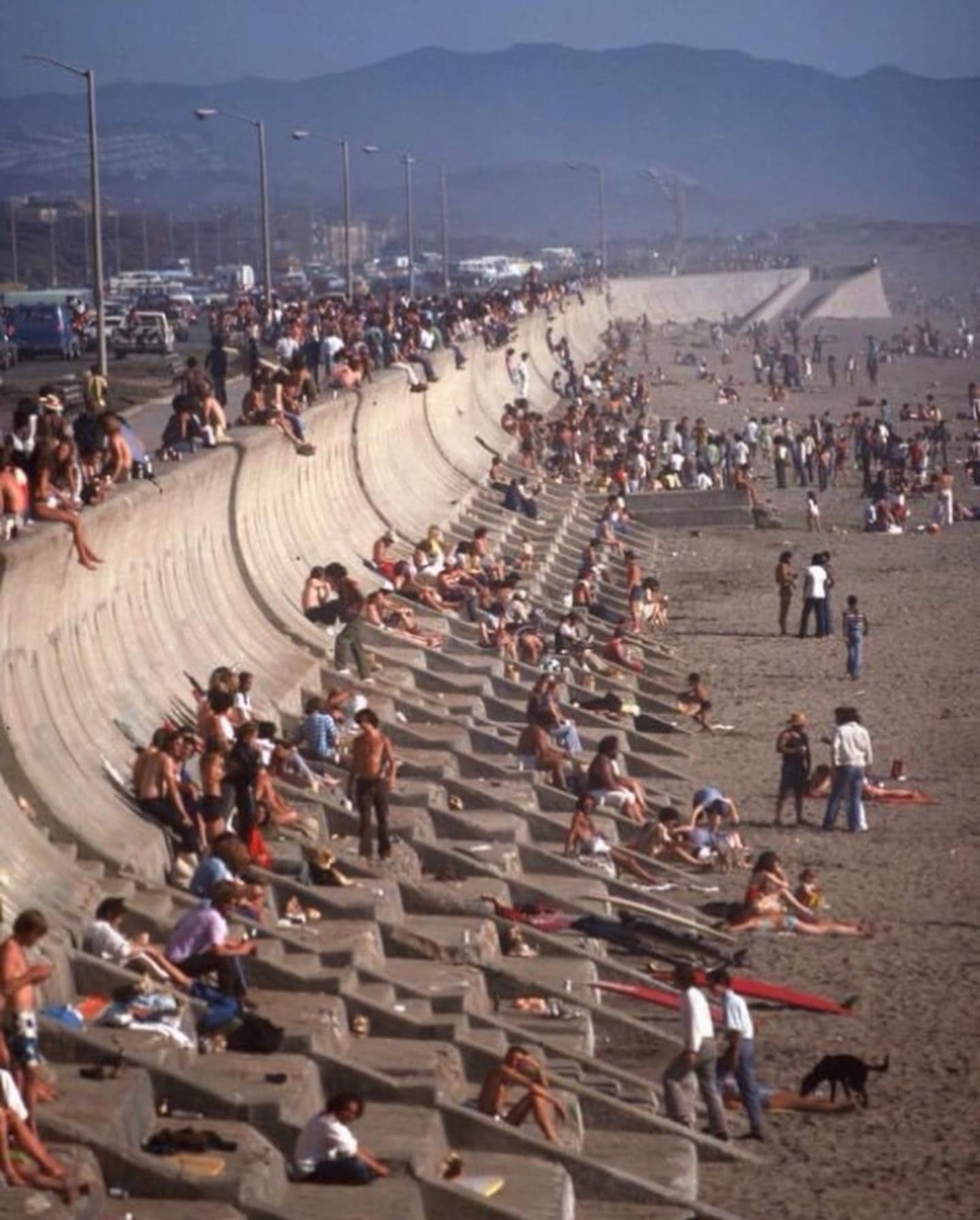
This meme references the 1970s Sea Wall controversy in San Francisco, where the city proposed a massive concrete barrier to protect the harbor and beach. The image captures the chaotic scene of thousands of residents and protesters sitting on the steps of the wall, representing the passionate and widespread opposition against the controversial engineering project, which was seen as a disaster to the local community and the environment.
simple-description (llama3.2-vision_11b)
The meme appears to be a photograph of a crowded beach, with a large number of people sitting on the sand or on the beach's concrete seawall. The image is captioned "When you're trying to get a good spot on the beach but everyone else has the same idea". The meme is poking fun at the idea that popular beach destinations are often overcrowded, and that it's difficult to find a good spot to relax or enjoy the sun.
detailed-analysis (gemma3-27b-vision)
Okay, let's break down this photograph through the lenses you've requested. I will only address sections that genuinely apply to the image and its potential interpretations.
1. Visual Description
The photograph captures a high-angle, long shot of Venice Beach in California. The dominant feature is a long, curving concrete structure resembling a series of stacked, crescent-shaped blocks. This structure snakes along the beach and is covered in people—many are sunbathing, sitting, lying down, or casually interacting.
The beach itself is densely populated with people, creating a lively and chaotic scene. The color palette is muted, dominated by concrete grey, sandy brown, and faded colors of clothing. The background features palm trees, a road with vehicles, and distant mountains. The lighting suggests a bright, sunny day. The overall impression is one of a heavily used and slightly worn public space, brimming with a diverse crowd. The image evokes a sense of public leisure, social interaction, and potentially, a certain amount of congestion. Clothing styles suggest the image was likely taken in the 1970s or early 1980s.
2. Foucauldian Genealogical Discourse Analysis
This photograph lends itself well to a Foucauldian reading because it visualizes a site of normalization and power dynamics embedded in the very architecture of the space.
- The Concrete Structure as Panoptic Device: The long, curved structure isn't simply a design element; it acts as a kind of tiered platform, exposing bodies to view. While not a literal panopticon, it enables surveillance, not necessarily by a single authority, but by the collective gaze of the beachgoers. Bodies are displayed, and those on the structure are, in turn, observing those on the sand. This creates a network of observation.
- Discourse of Leisure & the Body: The image represents a discourse around leisure, health, and the "ideal" body (even though there’s diversity, the implicit pressure to be seen in a certain state of sun-kissed relaxation is present). The structure encourages certain bodily practices (sunbathing, display) and potentially discourages others (privacy, solitude).
- Genealogy of the Beach as Public Space: Tracing the history of Venice Beach itself would reveal shifts in its role – from a somewhat isolated coastal area to a deliberately designed recreational space. This design is not neutral; it's a historical product of certain ideas about public health, recreation, and civic life. The design and use of the space construct ‘acceptable’ bodies and behaviors.
- Power/Knowledge: The very architecture embodies knowledge about how people will use space, how they’ll desire to be seen, and how they'll interact. This ‘knowledge’ is then exercised through the structure itself.
3. Critical Theory
A critical theoretical lens (drawing from the Frankfurt School, for example) can highlight the commodification of leisure and the alienation present even within this seemingly carefree scene.
- The Culture Industry: Venice Beach and its design can be seen as part of the "culture industry"—a manufactured form of leisure and entertainment designed to pacify and control the masses. The structure provides a visually appealing backdrop, encouraging consumption of the “beach experience” and potentially masking underlying social problems.
- Pseudo-Individualization: While the scene appears diverse, the structure standardizes behavior. Everyone is essentially performing the same activity (lounging, sunbathing) in a similar way. This can be interpreted as a form of pseudo-individualization—the illusion of freedom within a highly regulated environment.
- Spectacle & Passivity: Drawing from Debord’s "Society of the Spectacle," the beach can be seen as a space of display where people are more concerned with being seen than with genuine interaction. The architecture subtly encourages a passive, spectacle-driven form of leisure.
- Repression and Sublimation: The seemingly lighthearted nature of the beach may also represent a form of repression – a displacement of deeper social anxieties onto a superficial level of enjoyment.
4. Queer Feminist Intersectional Analysis
This is a complex area as the image doesn’t explicitly reveal much about individual identities. However, we can approach it through the lenses of surveillance, body politics, and the construction of public space.
- Gendered Surveillance and Body Politics: The concrete structure is a space of heightened visibility. Historically, women's bodies have been subject to increased scrutiny and control in public spaces. While the image depicts a variety of bodies, the very act of being displayed invites scrutiny and reinforces norms around desirability and acceptability.
- Intersectionality of Public Space: The space is not neutral. Access to, and comfort within, public spaces is often unequal, shaped by factors like race, class, gender, and disability. The design of the structure itself might favor certain bodies over others (e.g., offering little privacy for those who wish to cover their bodies).
- Reclaiming Space: While the structure could be seen as a controlling element, it’s also a space of potential resistance. The diverse range of people using it demonstrates a reclaiming of public space, a refusal to be confined by societal norms.
- Queer Visibility and Performance: The beach has historically been a site of queer visibility and performance. While not explicit in the photograph, the image lends itself to imagining queer bodies inhabiting and challenging the norms of public space.
Let me know if you’d like me to expand on any of these points, or explore other theoretical frameworks!
simple-description (llama3.2-vision)
The meme is a photo of a large crowd of people sitting on a long, curved concrete wall at the beach, with many people also lying on the sand below. The wall is lined with many rows of concrete seats, but most people are sitting or lying on the sand below. The text "I'm not arguing, I'm just explaining why I'm right" appears at the top of the image.
tesseract-ocr
| | = ; a | ers | - : eo a Se 5 eee at ae 6g : — Lieaeas eek AE hI, gli os ge f es itd = hon SE ee ee Ree ht Ae. j , jee ah Pe eee a wi ss 6 es peas, x a > ra a k NV. “ 2 oe he oe * 4 Lp : + — i’ a \ ry £ Aa Pras ei ee | ) ¥| gy Py es iY “Ne | \ Sah Ly ( i > + =a thy rhe . “8 ks ear SN i Vy) ea f - ‘ , > ae ee \ GRE Se he Se a es AWE te, Dates Mi a tk ta Tek a BS ee m2 — — oa a — :: : PY me » * a < . vmene a ce me x = ta - = ‘ee ‘ i. ihe BES = 3 a = ae . : at: : U a . 7 af - \ e md Ne as en me A ~ Ly ; Mi ww F |